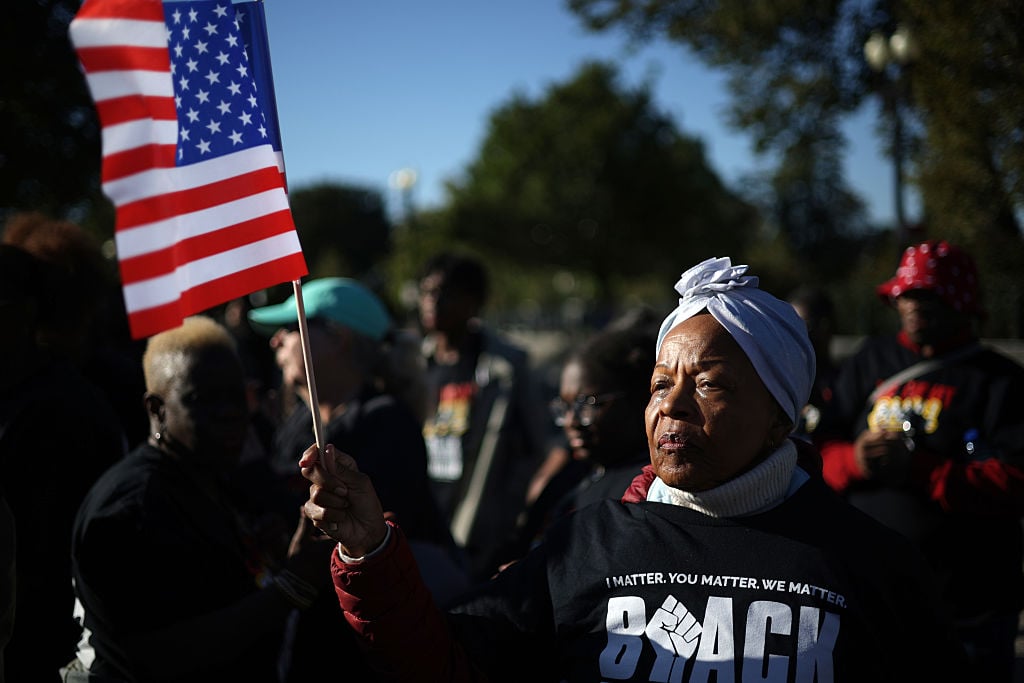
The St. Louis County NAACP is taking a bold stand by suing the U.S. Attorney General and the Department of Justice (DOJ) over the controversial decision to shut down the Community Relations Service (CRS). This federal agency, established under the Civil Rights Act of 1964, has played a crucial role in mediating conflicts and fostering dialogue around civil rights issues.
A coalition of civic organizations has joined the NAACP as plaintiffs in this lawsuit, including the Ethical Society of Police, the Missionary Baptist State Convention of Missouri, the Two Wrasslin’ Cats Accord, and several others. Their collective goal is to protect this essential agency from being dismantled without congressional approval, underlining the significant concern about maintaining effective channels for community conflict resolution.
John Bowman, the president of the St. Louis County NAACP, emphasized the historical importance of the CRS, noting its role in de-escalating violence faced by civil rights activists like Martin Luther King Jr. and John Lewis. “This agency is a vital negotiating tool that we utilize to bring about justice in cases of civil rights violations,” Bowman explained, highlighting that the CRS was instrumental in addressing racial tensions in various communities.
The lawsuit asserts that the Trump administration has shown an overt hostility toward the CRS, which the DOJ has purportedly characterized as misaligned with its law enforcement priorities. Instead of collaborating with lawmakers to amend its mission or operational guidelines, the DOJ decided to dismantle the agency outright. The plaintiffs argue that this action is unconstitutional because only Congress has the authority to create or eliminate federal agencies, and decommissioning the CRS contravenes the Civil Rights Act itself.
Historically, the Community Relations Service has provided critical mediation services aimed at preventing violence and resolving conflicts related to race and civil rights, a service that has been utilized across the nation, including in St. Louis County. Bowman recalled a specific incident where CRS was about to mediate a case involving the alleged assault of an off-duty Black police officer by three white construction workers. This mediation was abruptly halted when the DOJ decided to shut down the division responsible for civil rights work.
Bowman lamented that this case is just one of many where the DOJ’s actions have impeded the efforts of the NAACP and similar organizations in advocating for civil rights. He criticized the DOJ for its lack of communication with the very agencies that rely on CRS services prior to its dismantling, stating, “The community deserves to have these resources available to mediate and resolve issues, not to have them taken away without any input.”
The lawsuit was filed on a recent Monday in the U.S. District Court for the District of Massachusetts. Thus far, the Department of Justice has not responded to requests for comment regarding this legal action. Between March and September 2025, the CRS significantly scaled back its operations, withdrawing assistance from communities and refusing new requests as per directives from the DOJ. By late September, it reportedly reduced its workforce from 15 employees to just one in a dramatic move towards dissolution.
Bowman is no stranger to fighting battles such as this one, as the NAACP has a long history of legal advocacy. He articulated an awareness of the challenges involved in suing a powerful entity like the DOJ, drawing parallels to historical struggles where legal battles were fought to uphold civil rights. “After Reconstruction, they used Plessy v. Ferguson to roll back the clock,” Bowman said, indicating that the current administration seems to be repeating similar tactics. Nevertheless, he expressed determination to use their legal understanding and passionate advocacy to push back against these actions.
CORRECTION: This story has been updated to reflect that the Community Relations Service is a standalone agency established by the Civil Rights Act of 1964.