If you know the lyrics,
“Sisters are doing it for themselves,
Standing on their own two feet,
And ringing on their own bells,”
Across Chicago, Five Black women from different generations have built careers and give back emotionally, physically, socially, and economically to their communities.
Even when faced with daunting challenges, political obstacles, adversity, and harsh economic moments, they dig deep, press on, and reach back to lift others as they move forward.
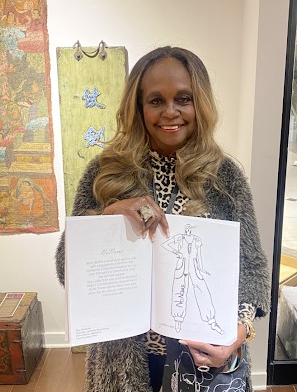
Jermikko Shoshanna Johnson: A Fashion Pioneer Pouring Back Into Chicago’s Future
At 79, pioneering fashion designer Jermikko still walks into her studio each day, her heart pounding with the same unstoppable drive she felt when she began her career with only a home sewing machine, a metal card table, three yards of fabric, and a six-pound dog.
Johnson, from the Southside of Chicago, Hyde Park, launched her first fashion brand under her own name more than four decades ago, ultimately becoming one of the first Black women to own a boutique on Chicago’s Magnificent Mile.
She built a reputation for outerwear that rejected the predictable. “Coats were always black, gray, or navy,” she said. “People couldn’t wait to take their coats off so others could see their outfits. I wanted coats people didn’t want to take off.” That vision would lead to JJ Hobo, the line that introduced her now-famous “Faces” print and pushed her into stores across the country and internationally.
Her problem-solving instincts later sparked one of her biggest innovations. After witnessing a young boy argue with his mother about wanting two different-colored hoodies and later hearing that schools and stores were banning hoodies altogether, Jermikko imagined a solution that didn’t limit kids but empowered them.
From that came The SwapOut, a hoodie design that unzips completely from left to right, allowing interchangeable colors and pieces.
“We take things away from kids instead of making them safe,” she explained. “I wanted to give them options.” The invention reached New York, connecting to Beyoncé’s stylist, where Beyoncé is seen wearing the hoodie in the “Formation” video and led Johnson to secure dual patents covering any garment that separates left to right with interchangeable components.
Johnson’s heart lies with young people. She crafts programs that ignite curiosity in high schoolers, teaching them manufacturing and design, and giving them tangible skills and the thrill of seeing their own creations in stores.
“Either support them, or they’ll take their talent elsewhere,” she said. Her dedication was reaffirmed by a moment she still recalls vividly: a single teen who toured her factory after others canceled. “He said, ‘I don’t want to die. I have nothing to do but hang on the corner.’ That stayed with me.” Moments like these drive her mission to provide meaningful alternatives for youth who feel unseen.

Johnson sees a lack of safe spaces, jobs, and creative outlets as major challenges. In response, she is working on the LaSalle Street Corridor revitalization project in Chicago and plans to open a design studio, retail space, and café for other creators. “People will be able to watch us manufacture,” she said. “It boosts the design community and local economy.”
Her impact appears in students who find direction through her programs. Young designers gain exposure, and her work paved the way for the fashion landscape long before her identity as a Black woman was recognized. “I laid the foundation others walk on now,” she said, as she continues to build brands and futures.
Katrina Thacker: Healing, Wellness, and Community Through Nzuri Kulture
When Katrina Thacker founded Nzuri Kulture in 2020, she never meant to chase fleeting trends; she was searching for solace, hoping to cultivate peace.

In the early months of the pandemic, when Chicago homes became workplaces, classrooms, and sanctuaries all at once, she struggled to find fragrances and wellness products that supported the emotional grounding she needed. “I was looking for scents that brought peace, harmony, and comfort,” she said. “We were all locked in, and I wanted something that actually tapped into inner healing.”
From that personal need, a full wellness brand rooted in aromatherapy and intentional living emerged. Nzuri Kulture started with Katrina’s home creations and now offers intention-based candles, skincare, and other aromatherapy products. The brand has rapidly expanded from a storefront in Bronzeville to a new location in Berwyn—another milestone from the beginning of her self-care practice.
From her vantage point as an entrepreneur, one of the most pressing issues she has seen is access to funding, to opportunity, and to systems that support Black-owned businesses from the ground up. “Economically funding is one of the hardest things,” she explained. “A lot of us can’t always get loans because of the requirements. So building community and networking becomes really important.”
Through grants, business cohorts, pitch competitions, and partnerships, she began filling the financial gaps that traditional institutions often refuse to bridge.
Her natural skincare line, rooted in remedies she started developing more than 20 years ago for eczema and sensitive skin, continues that exact purpose.
Giving back is not separate from her work; it is the work. Katrina regularly initiates community-centered projects, including October’s Hope Candle, which raises funds for breast cancer awareness organizations. What began as a one-month initiative may soon become a permanent campaign.
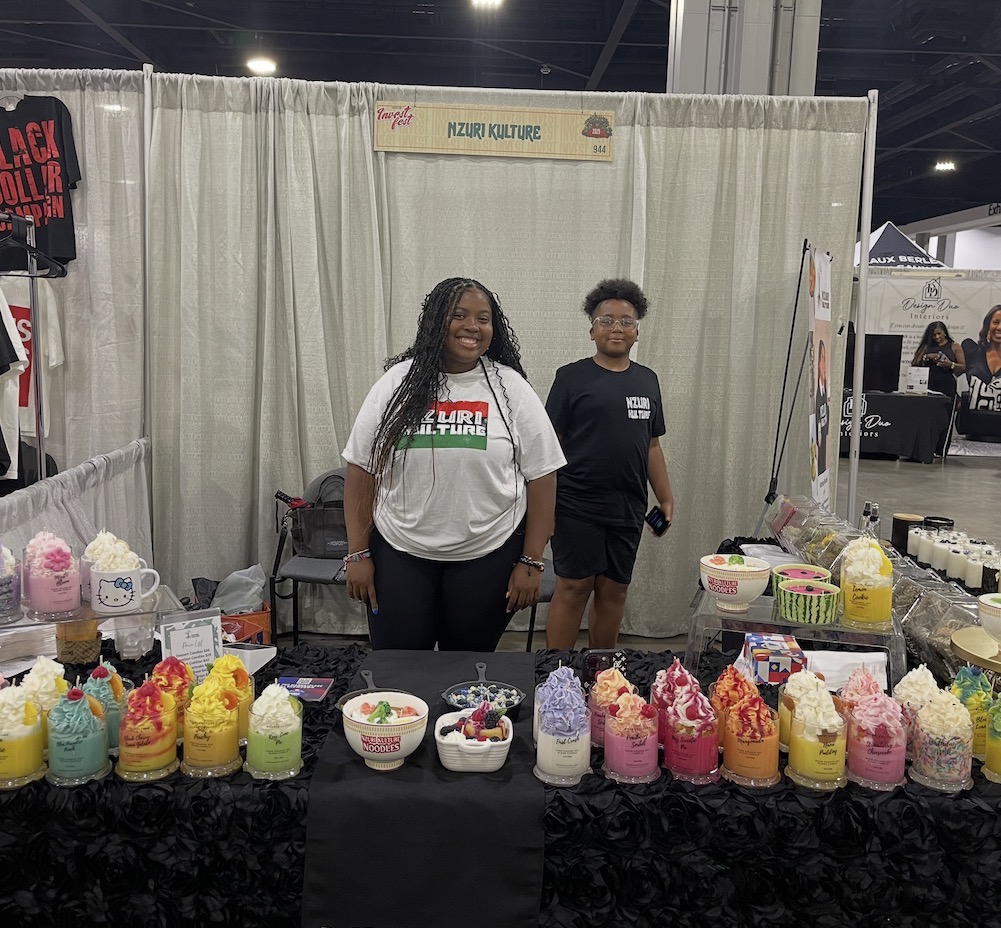
Her deepest impact radiates from the young people she hires and mentors. Katrina welcomes teenagers and young adults—often those searching for their first job—and guides them through entrepreneurship, customer service, and real-world challenges. “How are you going to get experience if nobody gives you any?” she said, her voice gentle but insistent. Her employees leave not just with leadership skills and the know-how to open and close a store but also with a newfound confidence to reach for opportunities they once thought were beyond them.
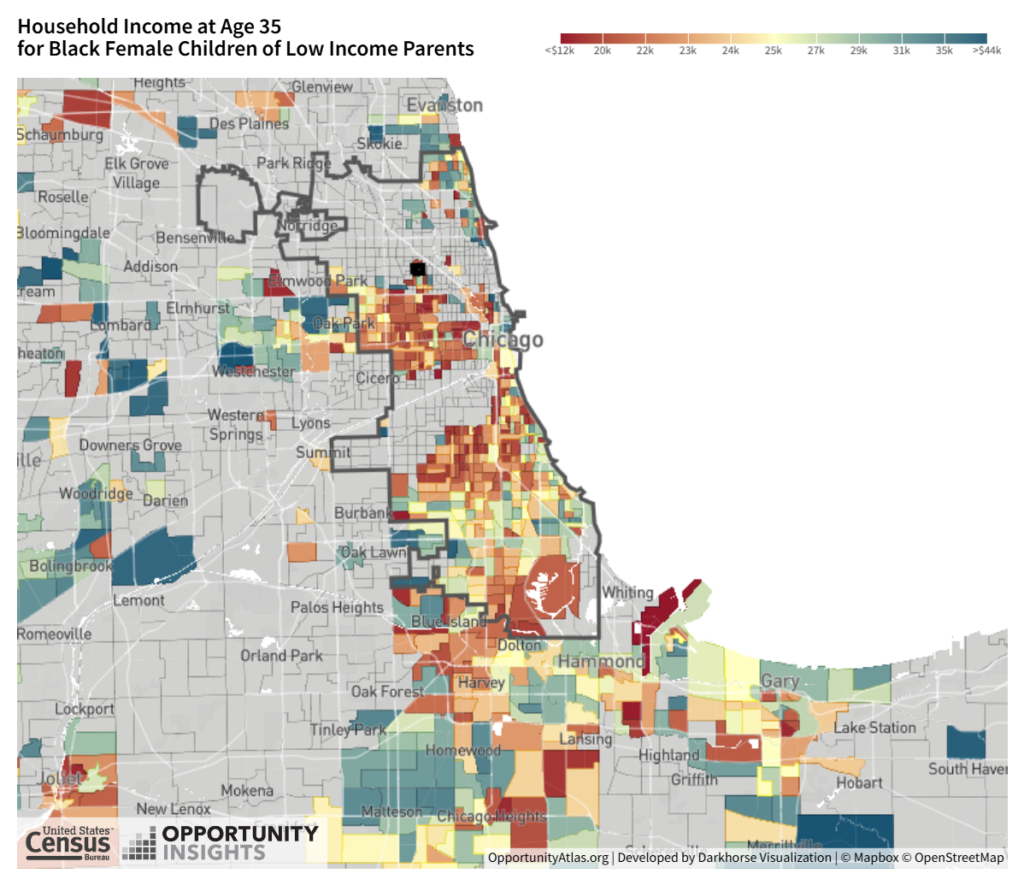
Neighborhood by neighborhood, Black women from low-income families bravely face adversity, transforming hardship into hope. Their triumphs spark resilience and strength, building powerful communities.
Statewide data show that women-owned businesses support hundreds of thousands of jobs. In Chicago, a major economic center, Black women entrepreneurs contribute a significant share of that impact.
According to the National Women’s Business Council’s 2023 report, Black women own 2.08 million businesses. That is 15% of all women-owned firms and more than half of all Black-owned businesses. These businesses employ 528,000 people and generate $98.3 billion in revenue.
Black women–owned firms were hit hard by the pandemic but showed remarkable resilience. From 2019 to 2023, average revenues rose 32.7%—far outpacing other women-owned businesses. If these businesses reached the average revenue of white women–owned firms, they would add $361.2 billion to the U.S. economy. At parity with men, they would add $1.5 trillion.
L. Marie Asad: Turning a Rare Diagnosis into National Advocacy and Hope

For L. Marie Asad, philanthropy was not a planned career shift; it emerged from survival, isolation, and eventually, purpose. Asad, a South Side Chicago native, attended CPS schools and later Illinois State University. She has dedicated her entire life to serving communities across Illinois. From working with nonprofits at just 13 years old to a 12-year career in community engagement with Blue Cross Blue Shield, she has always been committed to helping others navigate systems that often overlook them. But six years ago, her journey changed when a mysterious fatigue began to erode her daily life.
Despite her persistence, her doctor dismissed her concerns, blaming her weight and lifestyle.
But Asad knew her body, and she knew something was dangerously wrong.
“It wasn’t laziness. It wasn’t me being tired. Something was different,” she said. After months of unanswered questions, she pushed for the next steps. When her doctor mentioned abnormal liver enzymes, she took her health into her own hands and searched for a specialist. The second hospital she contacted got her in immediately and revealed the diagnosis: Primary Biliary Cholangitis (PBC), a rare autoimmune liver disease.
Alone, terrified, she did what many patients do at 3 a.m.: she Googled. “I read that I’d need a liver transplant. That I’d die within six months. It was devastating.” Fortunately, after a biopsy, she learned she was stage one—early enough for treatment to slow progression. But her fear, especially the loneliness of that moment, never left her. It changed everything.
Searching for a connection, Asad joined every online PBC group she could find. But she found few—almost no—Black women represented. “This disease usually affects older white women. I didn’t see anyone who looked like me.” Still, she shared her story publicly during PBC Awareness Month, which led to a life-changing message: an invitation from the PBC Foundation in the United Kingdom. They flew her to Scotland, where she became the organization’s first U.S. patient volunteer and was asked to lead its national virtual support group.
Her leadership helped launch something bigger. In 2024, the Friends of the PBC Foundation, a U.S.-based nonprofit, was established to support American patients. Asad became a founding board member and now serves as its board president. In just one year, the organization has hosted its first national patient conference, advocated for Illinois’ first PBC Awareness Month proclamation, and collaborated internationally with 22 advocacy groups at the global summit in Edinburgh.
The foundation also provides practical support, offering training on navigating health insurance and working toward a 50-state ambassador network to ensure patients—especially those in underserved communities—can access specialists and lifesaving care.
“You have to be the CEO of your own body,” Asad said. “Patients need to feel empowered to ask questions, to seek answers, and not accept dismissal.”

Her advocacy has taken her to Washington, D.C., multiple times, where she now helps shape policy as a member of the Illinois Rare Disease Commission. She uses her health-care expertise and lived experience to fight for early detection, better resources, and culturally aware support for Black women who are disproportionately diagnosed late.
For Asad, the impact has been profound. “It’s changed the trajectory of my life,” she said. “I’ve met patients who told me I was the first person with PBC they’d ever met. Now they feel empowered, connected, and hopeful.” Many have become volunteers themselves, joined clinical trials, or simply found peace in knowing they aren’t alone.
www.friendsofthepbcfoundation.com
Whitney Hampton: Redefining Wealth, Community, and Legacy Through Real Estate
For Whitney D. Hampton, real estate is far more than a business; it’s a blueprint for rebuilding communities, generational wealth, and personal belief.

Born in Harvey, Illinois, and educated in both Chicago and Missouri, Hampton’s pathway was shaped early by private schooling, relocation, and eventually a return to Chicago to attend DePaul University. But real estate wasn’t initially part of her plan.
Today, Hampton is one of the managing partners of The Whitmor Group, powered by Keller Williams One Chicago. The firm has become known not only for luxury real estate but for redefining what wealth-building looks like for Black families across Chicago.
“Our goal is to empower, educate, uplift, and reinvigorate communities.”
The Whitmor Group specializes in guiding first-time buyers, investors, and business owners through the real estate process—often from the very beginning.
For first-time buyers, that means walking side-by-side through credit repair, budgeting, connecting with the right lenders, and building the confidence to pursue what many once thought was an impossible dream. “So many people think homeownership is insurmountable,” she said. “It’s not. Even if you’re not ready today, we’ll take the journey with you until you are.”
For Hampton, that journey often begins with mindset. In divested communities—those hit hardest by decades of systemic neglect—she sees three recurring barriers: mindset, finances, and a lack of information. Some clients have never been told they can own property. Others don’t realize their first home can also be an investment that generates income. Many simply haven’t had access to programs and resources that Chicago and Cook County already offer. Her work fills those gaps.
The Whitmor Group also helps business owners secure not just their first storefront but also multi-unit buildings where they can operate, rent additional units, and expand their financial footprint. “Don’t just get the brick-and-mortar,” Hampton said. “Become the landlord.”
Her impact runs deeper than closed contracts. One client, who returned to Chicago from out of state, coined a name for the experience—“The Whitney Effect.” Every referral she sends comes with the same message: “You need a Whitney.” Another client told her, “You made me believe I could do something I never thought possible—and then you gave me the blueprint to do it.”
Hampton’s path into real estate was almost accidental. Her grandmother predicted she’d thrive in the field when she was 18, but Hampton brushed it off, uninterested in “sales.” Years later, while studying finance at DePaul, she earned her real estate license solely to help with investment opportunities. She had no intention of becoming a broker—until a Metra conductor she’d befriended referred his cousin, a veteran moving to Chicago.

Hampton initially hesitated. She lacked experience, and real estate brokerage wasn’t part of her plan. But he insisted, telling her he trusted her character. She guided that family through the purchase of their first property—an emotional closing that shifted the trajectory of her life. They later sent seven more referrals, and Hampton fully stepped into real estate, discovering her purpose along the way: financial empowerment for the Black community.
“By 2053, they say Black Americans will have a net worth of zero,” she said. “It is my life’s passion to change that statistic.”
Through education, coaching, strategic investment guidance, and relentless compassion, Whitney Hampton is doing just that—one family, one building, one belief at a time.
Tangela Thornton: Building Pathways of Healing and Hope for Chicago’s Young Women
When Tangela Thornton speaks about her work, it becomes clear that her mission is more than a career; it’s a calling.
Born in Birmingham, Alabama, and raised in Akron, Ohio, Thornton has traveled a long and purpose-filled path that led her to Chicago, where she now serves as the founder and CEO of Unlimited Potential, a licensed child welfare agency and community mental health center.

Affectionately known as “The UP House,” located in Blue Island, IL, her organization provides housing, therapy, life skills, and emotional support for young women ages 17½ to 21 who are aging out of Illinois’ DCFS foster care system.
Thornton’s journey began more than a decade ago, long before the UP House existed. She opened her home to young women who were pregnant, homeless, or simply had nowhere else to go. “I helped them finish school, get their first job, their first apartment,” she said. “Some had babies, some were transgender, some were escaping trauma. I just knew they needed a safe place.”
That instinct has evolved into a seven-acre, 149,000-square-foot therapeutic campus that Thornton personally helped design and decorate to feel warm, colorful, and healing rather than institutional. “Environment is everything,” she explained. “I wanted it to feel like home. A place where they felt safe.”
The need is enormous. When youth age out of care at 21, many face homelessness, exploitation, unemployment, and untreated trauma. “My job is to interrupt that cycle,” Thornton said. The young women who come to her have endured physical, emotional, and sexual abuse, neglect, trafficking, and profound instability.
Thornton prioritizes trust-building, mental health assessments, therapy, and coping skills before pushing employment. “We used to help them get jobs right away, but they’d get fired because they weren’t emotionally ready. Losing a job felt like another loss.”
Still, the success stories shine. Asia, one of Thornton’s first young women, came into her home at sixteen after her mother was killed. She graduated high school with honors, is pursuing a degree in psychology, and now works at AT&T. Another young woman, once shy and deeply depressed, graduated high school with a 4.6 GPA and earned a full scholarship to college. Several others are working, driving, and preparing to move into their own apartments.
Thornton knows that much of her work is emotional labor—especially for Black women. “People don’t understand the weight we carry,” she said. “We deal with racism, sexism, colorism, all of it. And still we’re expected to be strong.” Yet she sees her role as part of a larger legacy of resilience. “We have a responsibility to reach back and help others. Nobody understands a Black woman’s journey like another Black woman. When I see one, I don’t need the backstory—I feel it.”
Her dedication continued even during her own personal heartbreak. “While building the UP House, my husband was dying,” she shared quietly. “I cried in the car every night, but when the girls needed me, I had to be strong. That’s what being on assignment looks like.”
For Thornton, the mission is simple: create safety, create opportunity, create hope. And she does it the way Black women always have—through strength, compassion, and unwavering commitment to the next generation.

For generations, stereotypes have distorted the image of Black women. But the women featured here show, by example, who we really are. Despite obstacles, we keep moving, keep creating, and keep giving. Through faith, talent, and determination, these women have shared their stories while uplifting their communities and opening doors for others to follow.