

The Smithsonian Under Scrutiny: A Closer Look at a Cultural Tug-of-War

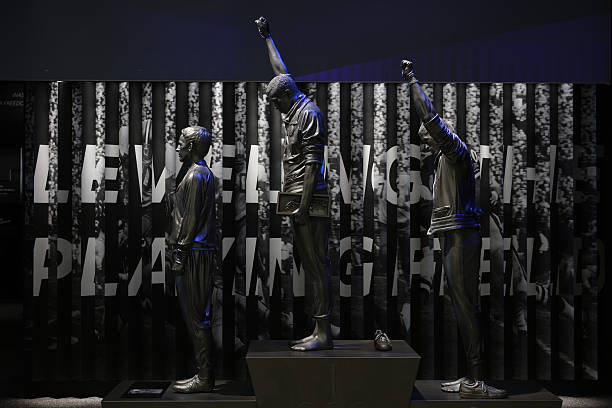
On August 28, 2025, a powerful display captured the attention of visitors at the Smithsonian National Museum of African American History and Culture. The exhibit, featuring statues of American athletes Tommie Smith and John Carlos alongside Australian Peter Norman, commemorated their iconic protest against racial injustice at the 1968 Olympic Games. But in an ironic twist, this display sits under the looming pressure of a government backlash against “improper ideology,” as outlined by the Trump Administration.
A Targeted Audit
The Smithsonian Institution is facing a rigorous review, with officials tasked with proving that their exhibitions do not support what the White House has decried as divisive ideologies. This audit, which singles out the National Museum of African American History and Culture, threatens to undermine the narratives surrounding Black history in the U.S. Amid this backdrop, the administration is also urging other Smithsonian museums to exhibit a “unified” American story, effectively placing the essence of Black struggles and milestones in jeopardy.
The Executive Order’s Impact
In a move dubbed “Restoring Truth and Sanity to American History,” the administration is pushing to eliminate exhibitions perceived to degrade shared values or promote racial division. While cloaked in the language of unity, this directive has raised alarm bells about the potential erasure of essential chapters in American history, particularly those relating to the Black experience. The concern is that this could lead to the reinstallation of statues and symbols linked to America’s racist past, such as Confederate monuments, which were toppled during the Black Lives Matter movement.
The Broader Implications
The implications of this executive order extend beyond mere politics; they touch the core of American identity and cultural representation. The National Museum of African American History and Culture, home to over 40,000 artifacts documenting the African American experience, stands as a critical counter-narrative to historically whitewashed accounts. Yet, an official complaint has emerged, labeling aspects of Black culture—such as hard work and family values—as “White culture,” hinting at a misguided reconciliation of America’s racial legacy.
A Pattern of Erasure
This campaign against what the administration deems divisive suggests a troubling trend toward historical amnesia. If the Smithsonian fails to comply with the newly prescribed guidelines, significant cuts to its financing loom. Such措置 could cripple the only national museum dedicated to telling the comprehensive story of African Americans—a narrative that reflects systemic injustices, significant triumphs, and the enduring struggle for equality.
The Dangers of “Uplifting” Narratives
In Trump’s vision of an “uplifted” America, the narrative shifts toward celebrating achievements devoid of context. The administration’s call to focus on public monuments that symbolize “extraordinary heritage” leaves little room for the realities of oppression that have shaped the nation. The argument presented is simplistic; it suggests that erasing disquieting truths equates to progress. However, the division rooted in American history cannot simply be wished away, nor can it be re-contextualized without doing damage to the collective memory and identity.
A Localized Fight
The current battle is reflections of a much larger struggle that extends beyond museums and into the fabric of American society. The fight against the reinterpretation of history resonates in local communities as well, where conversations about statues and historical public figures continue to invoke fierce debate. It prompts us to consider: whose narratives are prioritized? And at what cost do we seek “unity” in an already fragmented landscape?
By examining the stakes involved in the review of Smithsonian exhibitions, we uncover a complex interplay of history, identity, and governance. The trajectory of this audit will certainly shape the educational landscape and the way future generations engage with America’s multifaceted past.


