Addressing the Racial Wealth Gap: A Structural Perspective Through Tre Baker’s Lens
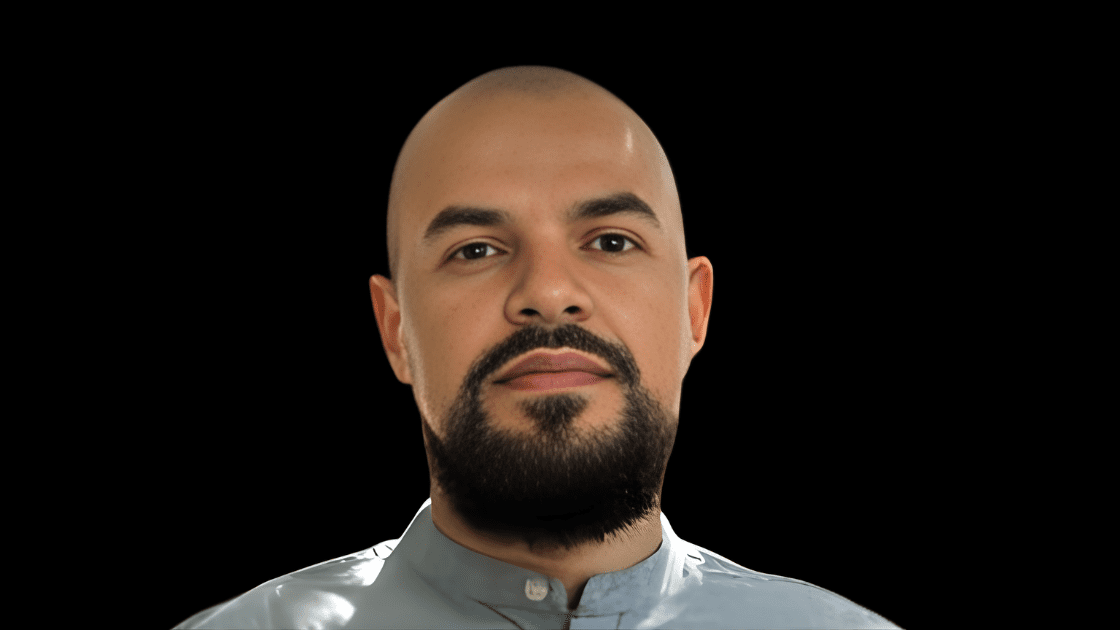
The racial wealth gap is often depicted as a multifaceted issue, commonly attributed to personal income, individual behavior, or varying opportunities. However, Tre Baker, an investor and economic development strategist, challenges this narrative by framing the wealth gap as an intrinsic structural problem. “The gap is the problem,” he asserts, emphasizing that as long as this disparity persists, solutions remain ineffective.
The Structural Nature of the Wealth Gap
In Baker’s perspective, isolated success stories may inspire, but they do little to alter the overarching structure of wealth distribution. He posits that broad participation in typical wealth-building strategies will fail to substantially impact the collective outcome within realistic timeframes. The issue at hand is not a lack of ambition or intelligence; rather, it is a deficiency in coordinated capital, institutional ownership, and intergenerational systems structured to preserve and grow wealth rather than dissipate it.
This holistic, structural understanding underpins Baker’s work in investing and economic development. His goal transcends incremental solutions—he seeks mechanisms capable of operating at scale.
A Background in Economics and Strategic Focus
Tre Baker’s professional journey is rooted in diverse investing experience ranging from venture capital to public markets. Over time, he honed in on a critical question: how is capital coordinated rather than merely accumulated?
“My day job is investing,” he clarifies, “but my passion is economic development.” Today, Baker’s focus revolves around capital allocation strategies that prioritize durability and cash flow, advocating for economic development initiatives founded on ownership rather than grants. He views the wealth gap through a balance-sheet lens, urging a deeper understanding of economic structures rather than treating it as merely a moral issue.
Cooperative Economics: Bridging the Gap
While cooperative economics is frequently mentioned in discussions around financial equity, Baker points out that it is seldom operationalized into effective systems. His critique takes a practical approach: “We don’t have enough money individually to move the needle.”
Individual wealth-building strategies improve personal outcomes but fail to create synergy or leverage collectively. Baker argues that without robust infrastructure, capital remains fragmented and subservient to systems that control scale and access to credit.
Operational Coordination for Impact
To foster true operational coordination, Baker emphasizes the need for vehicles that aggregate resources, consistently deploy capital, and recycle returns internally. This perspective moves beyond ideological debates, shifting the focus to the necessary financial engineering required to close the wealth gap meaningfully.
Understanding the Math Behind the Wealth Gap
Baker reiterates the significance of the math underlying the wealth gap. “If we closed the gap by a billion dollars a month,” he illustrates, “it would take over 4,000 years.” This harsh reality leads to a crucial conclusion: incremental solutions—regardless of their execution excellence—will not suffice to close the gap within a human lifetime.
Only large-scale mechanisms can shift the trajectory significantly. Systems that underwrite risk, compound capital, and maintain continuous operation possess a structural advantage in this effort. Baker contends that serious attempts to address the gap must directly engage these systems rather than circumvent them.
Permanent Capital Structures: Reimagining Wealth
One major drawback of direct cash payments is their transient nature. They are finite, subject to taxation, and vulnerable to external economic pressures. While they may provide temporary relief, they do not cultivate lasting balance-sheet transformation.
Baker proposes creating permanent capital structures. Instead of one-time distributions, funds would be pooled, invested, and retained in financial instruments designed for long-term accumulation. “The goal isn’t consumption,” he asserts, “it’s continuity.”
Within this framework, strategically structured insurance policies can facilitate capital growth in a tax-advantaged way while ensuring liquidity and ensuring intergenerational transfer without loss. This perspective reframes wealth from a mere income focus to viewing it as integral infrastructure.
Owning the Money-Creation Mechanism
At the institutional level, Baker advocates for ownership over participation. He identifies money creation as an exclusive domain of federal institutions and banks: “There are two entities that create money.” Control over these financial institutions directly affects one’s access to credit, shaping the terms and scale available to different demographic groups.
Building new institutions from the ground up is a slow and resource-intensive process; thus, consolidating existing institutions emerges as a more efficient approach to gaining operational leverage. By establishing institutional ownership, capital can circulate internally, fostering credit creation aligned with long-term goals and minimizing reliance on external entities.
Economic Development Through Localized Testing
Rather than engaging solely in abstract theorizing, Baker looks at localized environments as practical testing grounds for coordinated capital. Smaller cities provide a concentrated demographic, fewer institutional barriers, and more straightforward feedback mechanisms.
These testing environments allow the identification of friction points, where public institutions often struggle due to slower moving processes and governing constraints. The goal is not to achieve immediate transformation but to generate proof of concept that can be adapted and scaled up elsewhere.
Practical Priorities for 2026 and Beyond
Baker’s near-term priorities emphasize pragmatism over visibility. He stresses that organizational structure and operational execution take precedence over rhetorical flourishes and consensus-building efforts. The focus must remain on developing systems that can efficiently absorb capital, deploy it judiciously, and reinvest returns without persistent external input.
In this framework, strategically prioritizing cash-flowing assets, ensuring institutional control, and fostering mechanisms that reward patience over speculation become paramount.
The Central Thesis: Infrastructure Over Messaging
The thread connecting Baker’s work is a consistent thesis: durable economic power emerges from coordinated capital, institutional ownership, and frameworks engineered for generational compounding. Addressing the wealth gap should not be perceived as a mere messaging challenge; it is fundamentally an infrastructure problem.
The endurance of any solution hinges on systems designed to last, anchoring real economic empowerment in rigorous, collective resource management.
For readers eager to delve deeper into these innovative perspectives, Tre Baker’s book, In the Black by 2050, provides additional insights. Proceeds from the book further support the American Freedmen Foundation, dedicated to fostering the long-term capital structures necessary for progress in this critical arena.