‘Hood’ Stereotype in Black Gay Culture
In contemporary queer discourse, particularly within LGBTQ+ digital spaces, the term “hood” has taken on a problematic connotation. It embodies a stereotype that collapses complex individual identities into a narrow framework, associating “hood” with images of aggression, lack of education, and criminality—an experience often uniquely projected onto Black gay men. This stereotype enacts a damaging triple threat that sexualizes, racializes, and classifies Black life, forcing individuals into a caricature of hyper-masculine dominance.
To grapple with the implications of this identity, it’s essential to trace its historical roots in Black gay culture, revealing the harm it inflicts.
Toxic Masculinity and the Racist History of ‘Hood’
The portrayal of the “hood guy” archetype can be traced back through a history riddled with racism, dating back to slavery. Black men have historically been depicted as physically robust but intellectually shallow, promoting a narrative that paints them as “strong bodies, diminished minds.” This stereotype, often linked to the plantation Buck caricature, has served as a societal tool to justify violence against Black men, further entrenching systemic racism.
These historical narratives created the bedrock of hyper-masculinity, defining Black manhood in physical terms alone while diminishing emotional depth. Alternatively, societal narratives enforced by white supremacy classified Black men through harmful tropes aiming to maintain racial hierarchy.
Hood Masculinity in Black Gay Relationships
For many Black gay men, the adoption of “hood” or “DL” personas may be more about survival in a society that pressures adherence to hyper-masculine stereotypes. The demand for “straight-acting” traits has transformed “hood” aesthetics into a form of erotic capital. This persona—characterised by a deep voice, muscular build, and emotional guardedness—is often erroneously seen as a marker of authenticity in Black masculinity.
Hyper-Masculinity as Status
Such representations cement notions of worth that equate masculinity with toughness. Historical power dynamics used by white slave masters forged a view that prioritised physical dominance as a reflection of value, risking the erasure of intellectual engagement in Black male identity.
Sexual Violence and Emotional Hardness
The lineage of emotional suppression and sexual violence faced by enslaved Black men has morphed over generations, cementing responses seen in “DL” identities today. Yet this legacy is nuanced, embedded in the complexities of how identity plays out in varied socio-political contexts.
DL Then and Now: From Survival to Status
Originally, “DL” (Down-Low) described men, primarily Black or Latino, who existed within a public facade of heterosexuality, privately engaging in same-sex relationships. This covert existence was rooted in a need for protection against societal hostility, shaped by racism and homophobia. However, the modern interpretation has shifted towards a style of commodified identity, where secrecy is performed for status rather than survival.
Western DL Culture Today: Performance and Branding
In contemporary settings, “DL” often signals a stylised masculinity entrenched in dating applications and digital culture. The notion of DL has been rebranded, turning what was initially a protective mechanism into an erotic asset, prioritising performance over authenticity.
‘Hood’ and ‘DL’ as Languages of Survival
It’s crucial to note that for some, “hood” and DL identities can serve as familiar means of resilience and community. The challenge lies in recognizing the pressure to conform to identities steeped in historical stigma rather than seeking empowerment through them.
Harms of ‘DL and Hood’ Performances in Black Culture
a. The Hood Aesthetic
The promotion of physical dominance over intellectual engagement remains a significant issue, as the prioritization of the “hood” aesthetic shapes dating dynamics among Black gay men.
Harms of performing “Hood”:
- Performance Over Authenticity: The romanticisation of the “hood guy” compels many to sacrifice intellect and emotional nuance to fit the mold.
- Encourages Risky Behaviour: This performance often incites fear-driven behaviors linked to masculine defense mechanisms.
- Policing Others: The internalisation of these stereotypes leads to self-policing within communities, reward for hyper-masculine displays while marginalizing vulnerability.
- Minimises Black Intellect: Heightened emphasis on racialized masculinity complicates the recognition of intellectual success among Black men.
- Intensifies Anti-Blackness: The glorification of aggressive masculinity fosters the myth that academic or professional success is at odds with Black identity.
- Widens Community Division: Stereotyping reinforces fracture lines within Black communities, echoing historical divide-and-conquer tactics.
b. Harms of Curated DL Identities on Dating Apps
This aspect focuses on the curated performance of DL identities as a way to gain attention and status, particularly on dating platforms. It’s essential to recognize that this portrayal can exclude those in less hospitable environments where secrecy is genuinely a matter of survival.
Routes DL Posers Gain Status on Apps
- Masculinity Branding: Describing oneself as DL alongside masculine identifiers to signal toughness.
- Erotic Capital: Utilising secrecy as a fetishised trait, presenting the DL label as desirable.
- Proximity to Heterosexuality: Attracting others with profiles that emphasize closeness to heterosexual norms.
- Visual Cues: Coded aesthetics like urban styling or tracksuits that signal the DL persona.
- False Hierarchies: Posing as rare and exclusive to boost desirability through the DL label.
- Community Policing: Elevating one’s standing by disparaging openness or femininity in others.
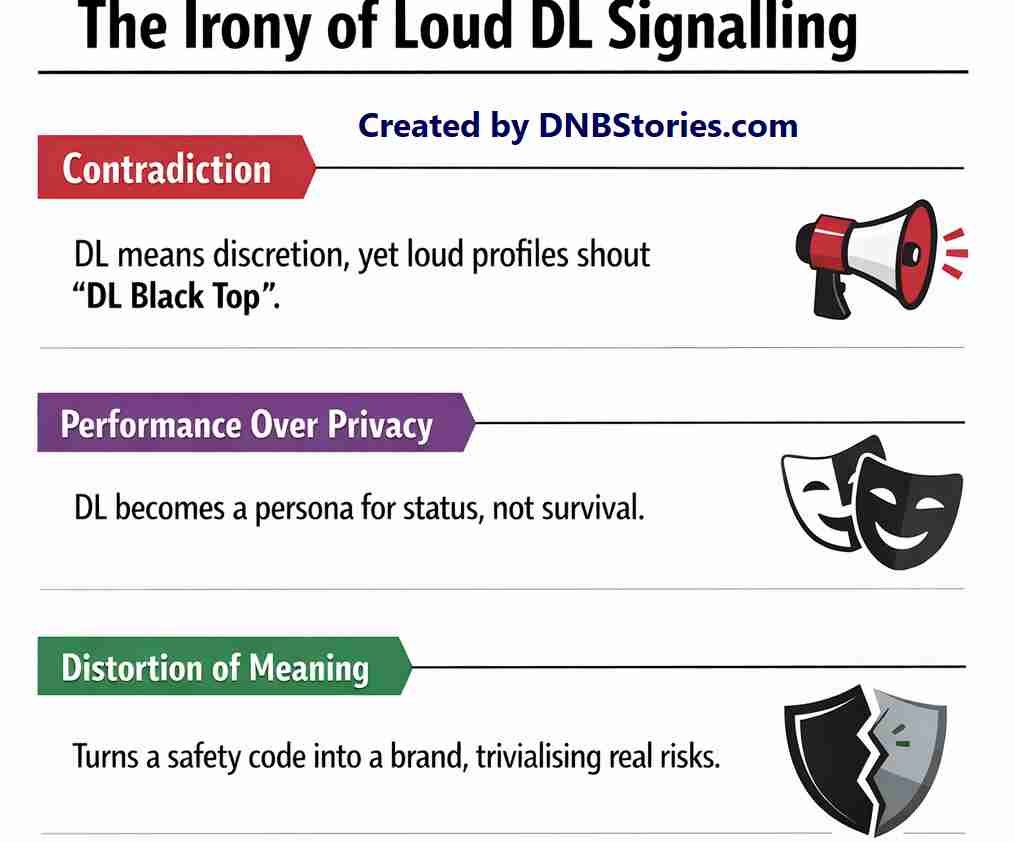
Dangers of DL Performances on Apps
- Erodes Trust: The commodification of secrecy fosters a “trust deficit,” as performative honesty appears less credible.
- Reinforces Stigma: Such performances throughout digital spaces propagate the notion that queerness is inherently discreet.
- Promotes Harmful Hierarchies: This behaviour uplifts hyper-masculinity while marginalizing authentic expressions of self.
- Normalises Risky Disclosure: This blurring of boundaries can increase vulnerability for genuinely closeted individuals.
- Encourages Fetishisation: The reduction of identity to sexual aesthetics perpetuates stereotypes.
- Psychological Strain: Performative secrecy can induce identity conflict, anxiety, or fragmentation.
- Community Division: Hierarchical structures foster discord within communities, diluting collective strength.
Hood and DL Masculinity: The Dominant Top Trap
The pressure to assume dominant “top” roles further limits the spectrum of masculinity available to Black gay men, framing deviation from this norm as weakness. This narrative mirrors historical conditioning, where physicality rather than intellectual or emotional depth dictated worth.
As profiles on dating platforms reinforce these rigid expectations, Black men often find themselves seeking validation in hyper-masculine displays, which obscure their more nuanced identities.
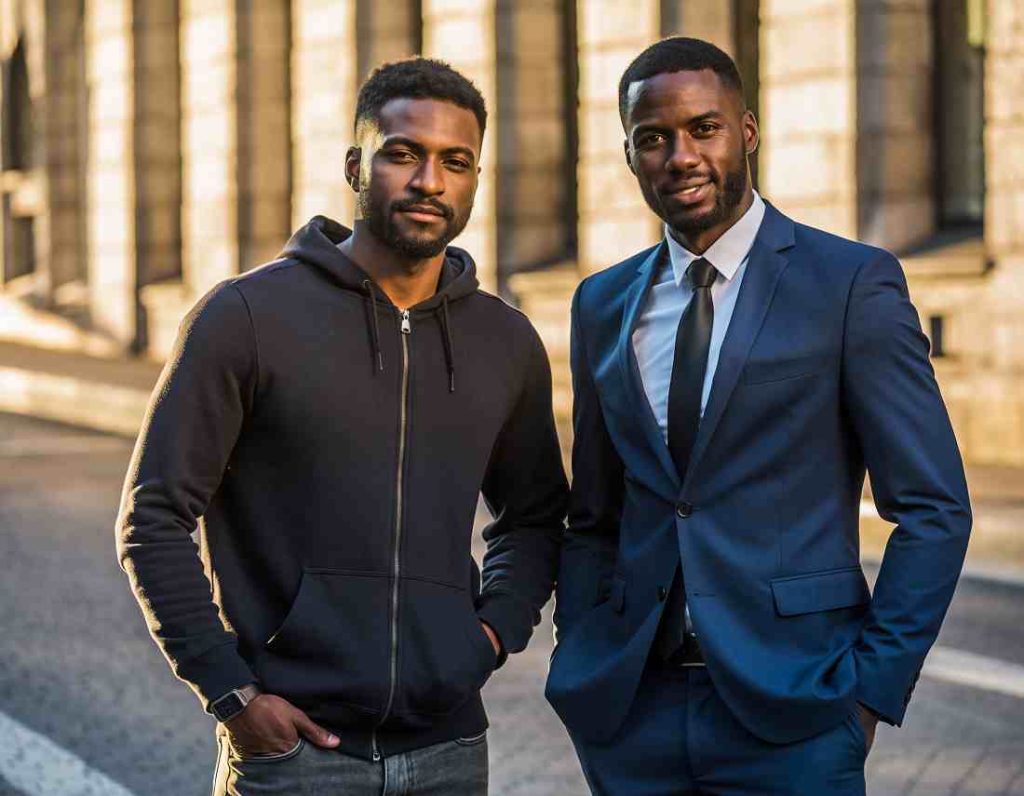
Black Gay Men: Rejecting Inherited Masculinity Scripts
Agency begins with awareness. Recognising that societal expectations regarding gender and sexuality are often inherited rather than chosen can lessen their grip. Embracing a range of identities can open pathways to freedom.
- Reclaim Softness as Strength: Embracing vulnerability allows for a richer understanding of masculinity beyond aggression.
- Separate Desire from Expectation: Authentic sexual autonomy emerges from exploring personal pleasure and dismantling performance pressures.
- Build Supportive Communities: Establishing spaces that value intellect and vulnerability instead of rigid standards encourages holistic acceptance.
- Reject the Fetishisation: Recognising the limitations imposed by stereotypes fosters a sense of individuality, casting aside societal labels.
- Allow Multiplicity: Understanding that Black men embody various identities can empower them to explore their complexities without constraint.
Final Word: We Must Write Our Own Scripts
True liberation lies in forging our own paths through self-understanding, allowing masculinity to reflect our authentic selves rather than imposed expectations. This is the essence of self-defined masculinity. Our perspective on masculinity should be expansive enough to give every Black man the space to explore, question, and evolve without fear of judgment or limitation.
References
- Foster, T. A. (2011). The Sexual Abuse of Black Men under American Slavery. Journal of the History of Sexuality, 20(3), 445–464. https://doi.org/10.1353/sex.2011.0059
- Green, A. I. (2013). “Erotic capital” and the power of desirability: Why “honey money” is a bad collective strategy for remedying gender inequality. Sexualities, 16(1-2), 137–158. https://doi.org/10.1177/1363460712471109
- Hooks, B. (2004). We Real Cool. Routledge.
- Majors, R., & Billson, B. (1993). Cool Pose: The Dilemmas of Black Manhood in America. Touchstone Books/Simon & Schuster. https://psycnet.apa.org/record/1995-97721-000
- Snorton, C. R. (2014). Nobody Is Supposed to Know. University of Minnesota Press. https://www.upress.umn.edu/9780816677979/nobody-is-supposed-to-know/
- Stacey, L., & Forbes, T. D. (2021). Feeling Like a Fetish: Racialised Feelings, Fetishisation, and the Contours of Sexual Racism on Gay Dating Apps. The Journal of Sex Research, 59(3), 1–13. https://doi.org/10.1080/00224499.2021.1979455
- Strayhorn, T. L., & Tillman-Kelly, D. L. (2013). Queering Masculinity: Manhood and Black Gay Men in College. Spectrum: A Journal on Black Men, 1(2), 83–110. https://muse.jhu.edu/article/503123
- Stuart, F., & Benezra, A. (2017). Criminalised Masculinities: How Policing Shapes the Construction of Gender and Sexuality in Poor Black Communities. Social Problems, 65(2), 174–190. https://doi.org/10.1093/socpro/spx017