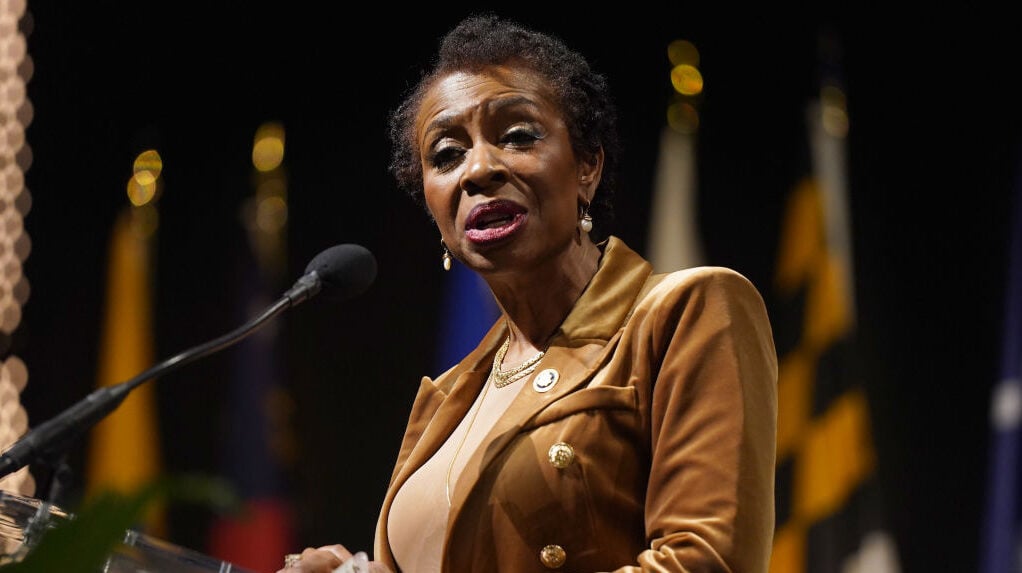
During a recent press conference at the 54th Congressional Black Caucus Foundation’s Annual Legislative Conference, Congresswoman Yvette D. Clarke voiced her outrage over the racist attacks against her colleague, Congresswoman Jasmine Crockett. “These folks have lost it,” she declared, emphasizing the troubling nature of the rhetoric being directed toward members of Congress, particularly women of color.
The harsh remarks in question came from Laura Loomer, a controversial figure known for her far-right viewpoints and alignment with former President Donald Trump. Loomer labeled Crockett as “ghetto,” a comment that stirred significant backlash and led the Congressional Black Caucus (CBC) to pledge a strong response. Clarke remarked, “Stay tuned,” signaling that the CBC would not remain silent in the face of such egregious statements.
The exchange highlights a broader political context where rhetoric against Black lawmakers is becoming increasingly common. Loomer’s outburst was triggered by Crockett’s criticism of white Democrats who had expressed support for Charlie Kirk—an individual infamous for his polarizing views on civil rights issues, including diversity, equity, and inclusion (DEI). Crockett was highlighting the contradictions within Democratic ranks, drawing attention to the harmful implications of endorsing figures associated with regressive statements regarding the Civil Rights Act of 1964.
“What hurts my heart is knowing that we have ghetto Black b—–s who hate America serving in Congress,” Loomer tweeted, igniting outrage from various corners of the political spectrum. For Clarke, this level of discourse represents a dangerous normalization of racial and gender attacks within American politics, particularly directed at those who challenge the status quo.
Amidst an administration that Clarke described as being “open season on Black people,” the CBC is grappling with increasingly aggressive political narratives against representatives like Crockett. Clarke pointed out the strategic timing of Loomer’s comment, noting that it aligns with broader initiatives aimed at dismantling DEI policies—efforts that disproportionately affect Black families and communities across the nation.
In her remarks, Clarke did not shy away from addressing the implications of such rhetoric in a time where political violence is escalating. She lamented that while calls for toned-down rhetoric are often made, the actions of individuals like Loomer make it evident that many are more interested in sensationalism than in constructive dialogue.
Clarke underscored the importance of the CBC, historically known as the “conscience of the Congress,” in responding to such unfounded accusations. She articulated that while they must confront these adverse attacks head-on, they also have a responsibility to advance their legislative agenda. She expressed concern that some lawmakers are leveraging extreme rhetoric to gain media attention, likes, and financial support—often at the expense of vulnerable members of the CBC.
This scenario is a reflection of the challenges faced by not just the Congressional Black Caucus but by lawmakers who strive to amplify marginalized voices in an increasingly polarized political environment. As the CBC prepares to respond to Loomer’s remarks and other instances of racialized attacks, the significance of advancing a collective agenda while tackling these challenges cannot be overstated.