


Artificial intelligence is reshaping business. According to the 2025 Work Trend Annual Index Report, a global survey of 31,000 business leaders conducted by Microsoft and LinkedIn, 81% said they expect AI agents to be moderately or extensively incorporated into their company strategy in the next 12-18 months.
At the same time, digital twin technology is retooling work in construction, manufacturing, and energy – industries essential to Louisiana’s economy. Digital twins are virtual, real-time replicas of physical objects, systems, or processes that continuously update as conditions change. Workers use digital twins to simulate performance, improve safety, and reduce costs across real-world applications.
“AI and digital twin technologies are transformational,” said LSU Engineering Dean Vicki Colvin. “Our students—and our state—need to be prepared to build them, test them, use them, and improve them in order to stay competitive.”
LSU’s College of Engineering is addressing this need by creating courses, certificates, and degrees focused on AI and digital twin technologies. The engineering faculty are rolling out an impressive lineup of educational offerings designed to elevate the skill level of the workforce:
- A new digital twin certificate – the first of its kind in the U.S., co-developed by academic and industry experts. This program consists of seven online courses, offering professionals extensive, real-world experience in digital twin technology, applicable in sectors ranging from architecture to healthcare.
- A new bachelor’s degree in artificial intelligence – this will be the first of its kind in Louisiana. Scheduled for approval by the state Board of Regents this spring, it may be available to undergraduates as early as Spring 2027.
- A new online master’s degree in computer science with an AI track. This program allows students to delve into foundational AI, machine learning, reinforcement learning, and robotics. Already, 19 students have enrolled, many being working professionals.
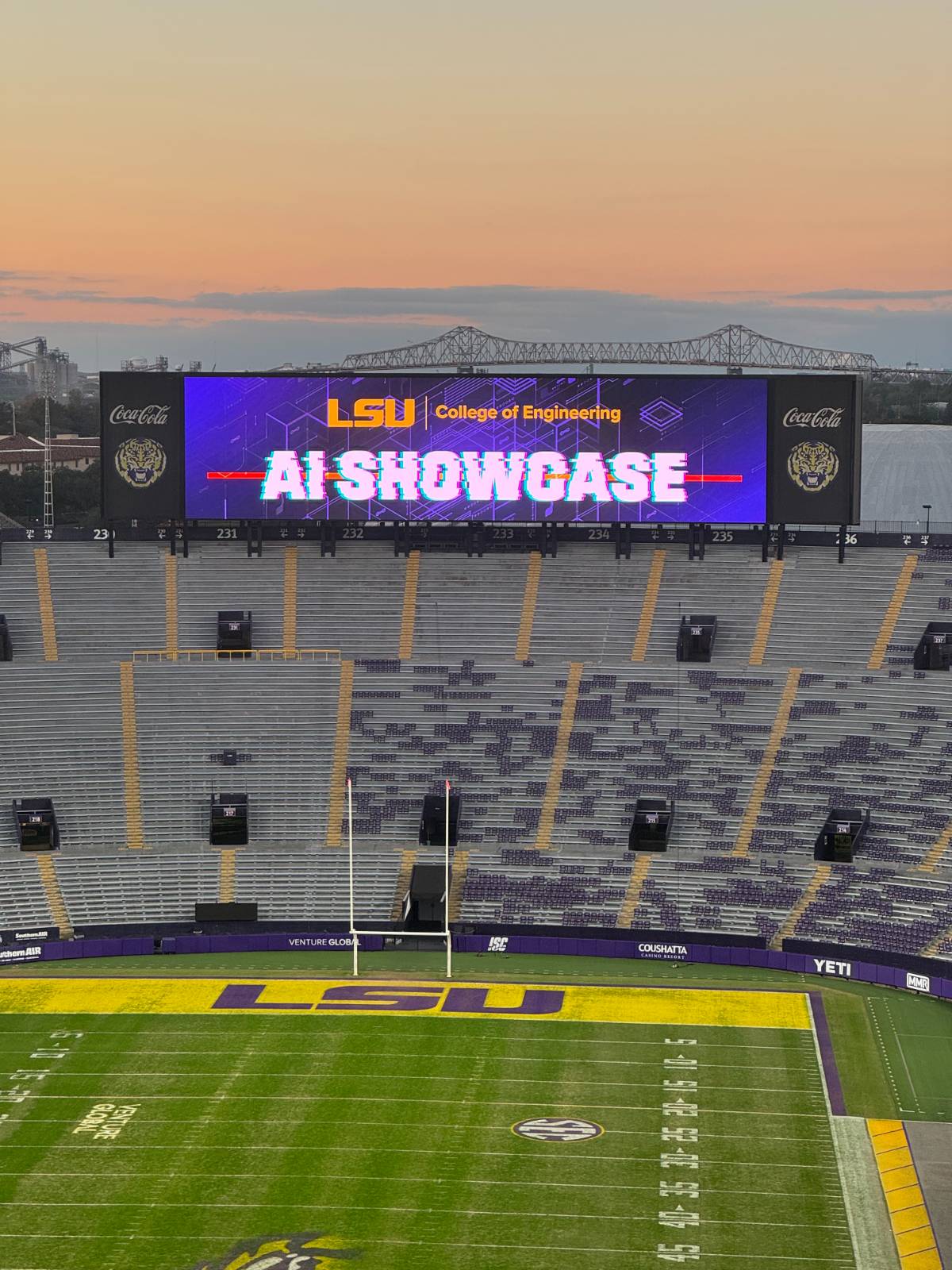
- An undergraduate capstone-style computer science course that connects students with industry professionals to create AI applications addressing real-world business problems. The culmination of this course is a showcase where student teams present their solutions at a formal event held at Tiger Stadium.
The engine driving much of this innovation is LSU’s Division of Computer Science and Engineering, led by Ibrahim Baggili, PhD, division chair and Roger Richardson Professor.
“We’ve been working hard and fast to create new offerings,” Baggili stated. “AI is transforming how we work and learn, and we have a responsibility to Louisiana and the region to equip residents to use it effectively and ethically. Digital twin is another powerful tool that we need to prepare the workforce to use now and in the future.”
Many of these academic advancements are rooted in collaborations across the LSU campus and within the Baton Rouge business community.
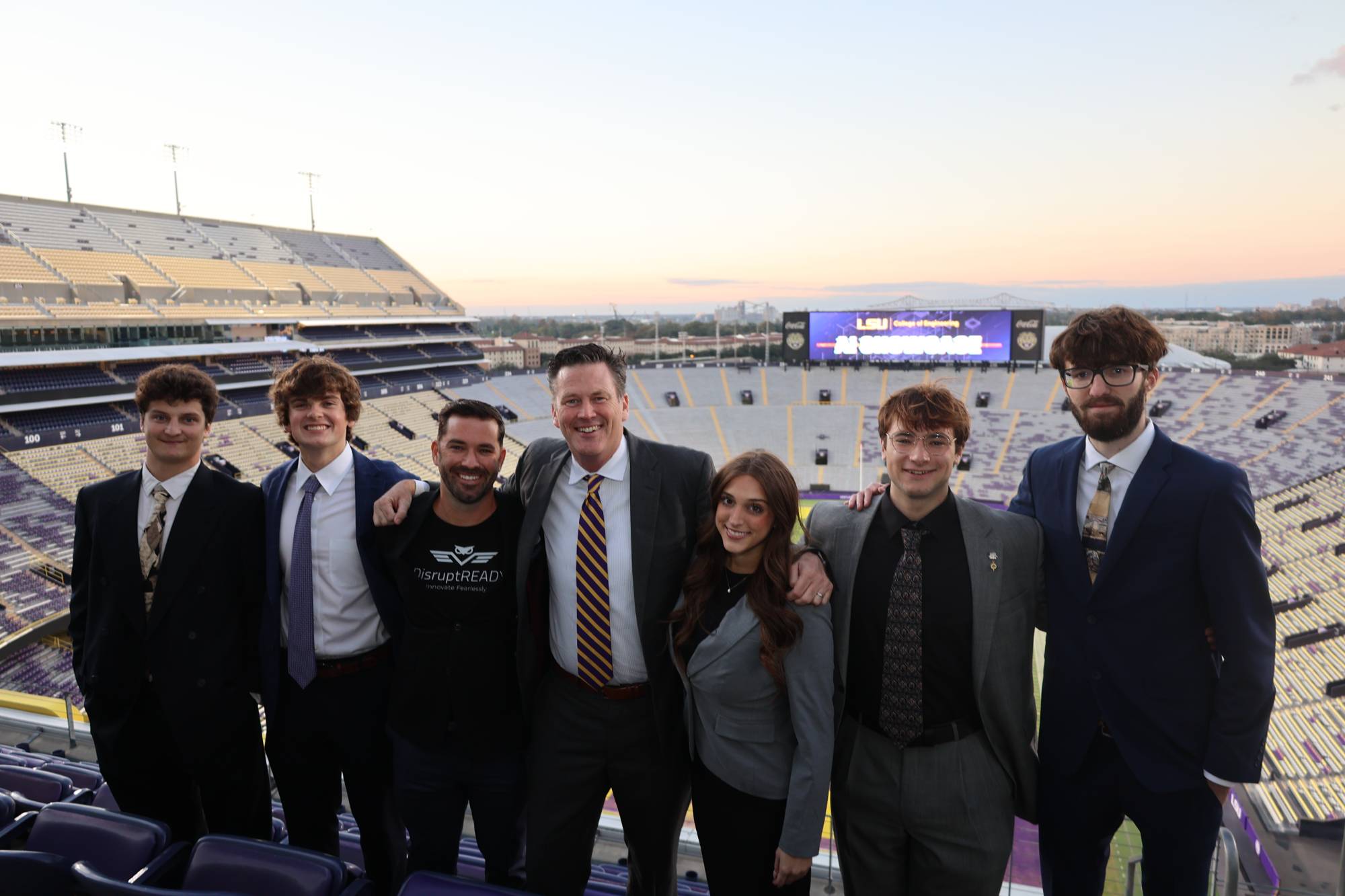
Adjunct Instructor Henry Hays and LSU students at the AI Showcase inside Tiger Stadium.
The Digital Twin Design and Production Certificate exemplifies a successful partnership between LSU’s College of Engineering, LSU Online, the Baton Rouge consultancy DigiTwin Global, and the engineering software firm Bentley Systems.
Similarly, the AI capstone course, Computer Science 4700 | Honors 3025, showcases teamwork between students from LSU’s E.J. Ourso School of Business or the Roger Hadfield Ogden Honors College leading teams of College of Engineering computer science students.
In these teams, students tackle real workplace challenges submitted by industry sponsors. Notable past sponsors include major Louisiana companies such as BASF, Entergy, Our Lady of the Lake, and Performance Contractors.
LSU senior Valerio Luftig, who took Computer Science 4700 in Fall 2025, was enthusiastic: “Every other class is living in theory. In this class, I got to live in the real world, with real AI challenges faced in real businesses. Great experience!”
Students appreciate that the course feels akin to an internship, filled with industry exposure, intense effort, and high expectations.
“You’re learning to code in the class while tackling real problems,” remarked Skyler Dowling, a recent computer science alum. “The homework was incredibly demanding, but you genuinely learn something. This course was brilliant, and we need more of it. It’s fantastic to see LSU stepping up its game in AI and investing in education.”
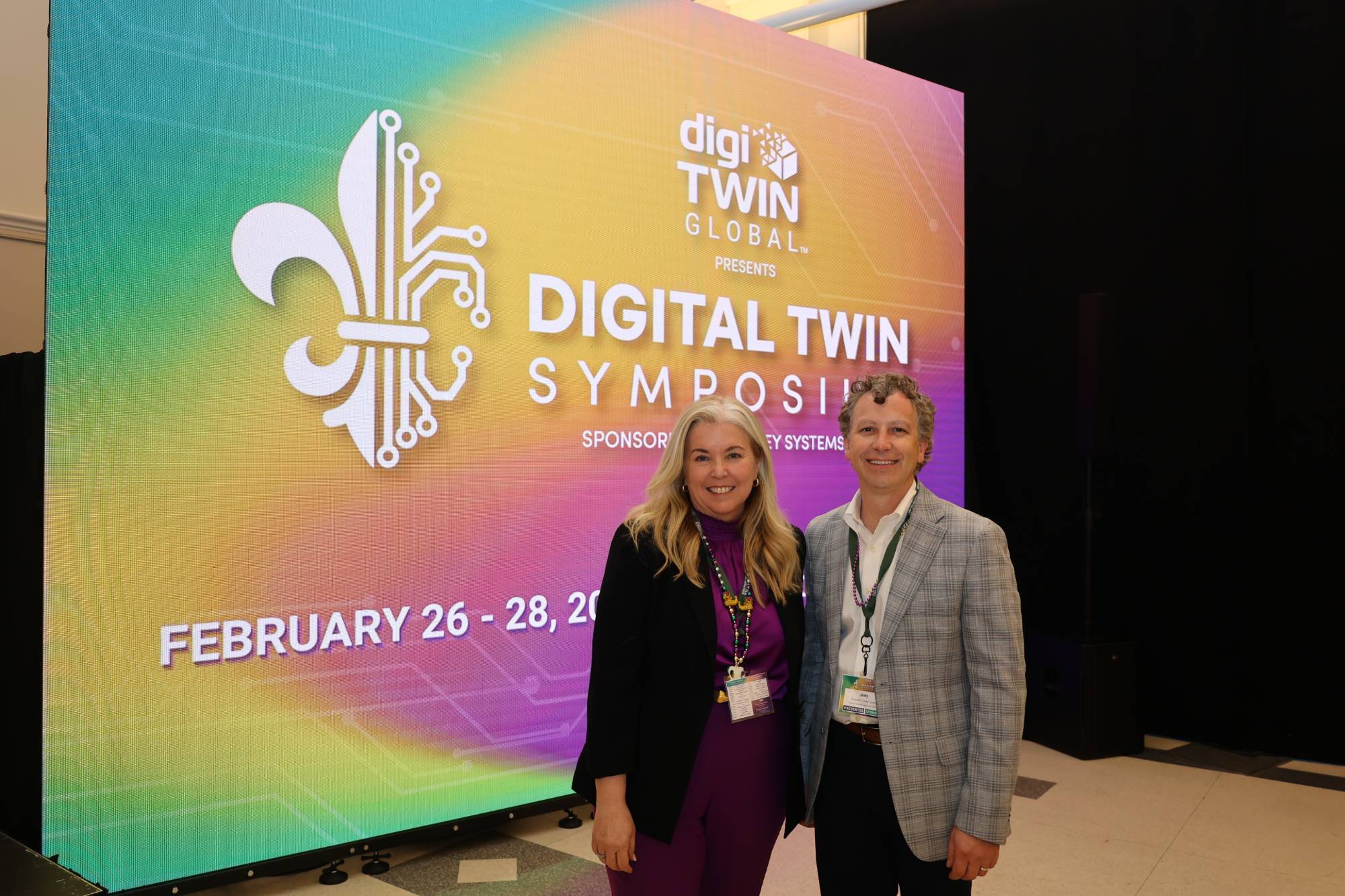
College of Engineering Dean Vicki Colvin with LSU graduate and licensed professional engineer Russell J. “Joey” Coco.
LSU Engineering’s computer science faculty are currently developing a dual enrollment course, AI Essentials, aimed at Louisiana high school students. This course will enable students to earn college credits through LSU while learning about AI system construction, operations, and evaluation. Set to launch in Fall 2026, it is a collaboration with LSU’s Gordon A. Cain Center for STEM Literacy.
“A lot of places are jumping on the AI hype and are just data science courses in disguise,” Baggili noted. “What we’re trying to do at LSU is help students not only understand how AI systems are built and how they function but also to ensure they can build them rigorously and evaluate them critically. We aim to shape the AI engineers of the future.”


