


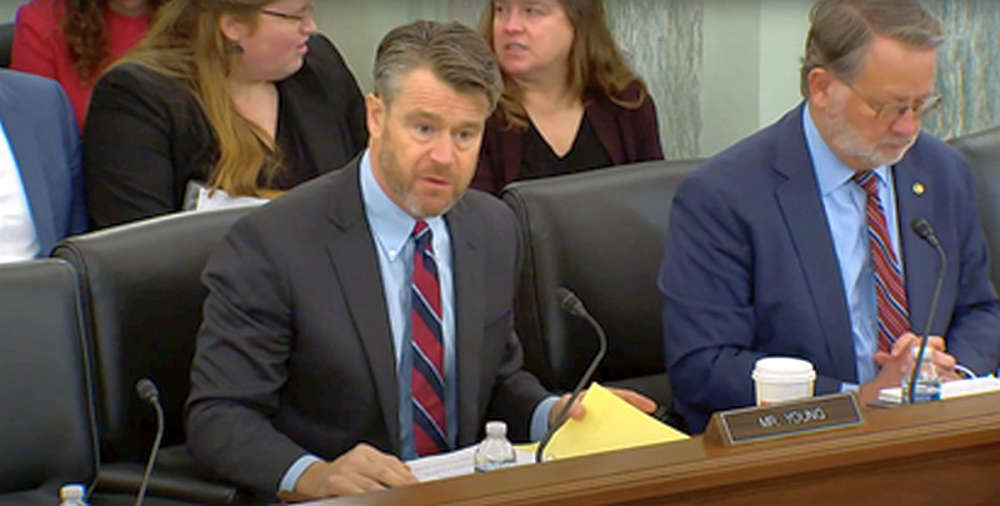
On Tuesday, U.S. Senators Todd Young (R-Ind.), Michael Bennet (D-Colo.), James Lankford (R-Okla.), Catherine Cortez Masto (D-Nev.), and Maria Cantwell (D-Wash.) introduced the IRA Charitable Rollover Facilitation and Enhancement Act, legislation that would amend the tax code to support more charitable giving options for older Americans.
The legislation highlights a significant gap in current tax policy, which permits older Americans—those aged 70½ or older—to make Qualified Charitable Distributions (QCDs) from their individual retirement accounts (IRAs) directly to qualifying charities without counting those distributions as taxable income. However, the existing law restricts these distributions from being made to donor-advised funds (DAFs), which are becoming increasingly popular among philanthropists. This limitation has left many who wish to streamline their charitable efforts navigating unnecessary hurdles.
Senator Young emphasized the bill’s importance, stating, “Charitable giving has long been a way for Americans to support their local communities and causes they believe in. Our bill will make a small fix to the tax code to enable more flexibility for older Americans to generously give to the people, places, and organizations they care about.” This simple amendment aims to foster generosity among seniors by expanding the ways they can contribute to causes they find meaningful.
Senator Bennet added, “The IRA Charitable Rollover Facilitation and Enhancement Act will streamline the charitable donation process, empower Coloradans to do more with their giving, and direct larger amounts back to Colorado communities.” He pointed out that community foundations are well-placed to understand local needs and will utilize these funds in creative and impactful ways. This flexibility could ultimately elevate the level of philanthropic support available to various local initiatives.
Senator Lankford noted the bill’s potential impact on smaller, local charities, stating, “This bill makes a simple fix. It allows Qualified Charitable Distributions to work better with donor-advised funds, which help families set money aside and support the causes they care about over time. For smaller and rural charities in Oklahoma, that means more steady, local support.” His comments reinforce the idea that facilitating easier donations can strengthen community foundations and the nonprofits they support.
Echoing the sentiments of her colleagues, Senator Cortez Masto remarked, “The current tax code makes it harder for generous Nevadans to give to charitable organizations. This simple, commonsense fix will make it easier for Americans to give donations to the causes that they value and will spur more people to invest in their communities.” Her emphasis on the bill’s straightforwardness signals that practical solutions can lead to significant improvements in giving behaviors.
Senator Cantwell highlighted the broader implications for nonprofit organizations, stating, “Community foundations in Washington State do incredible work supporting multiple, community-based organizations—food banks, childcare centers, housing programs, health clinics, and environmental groups—many of which rely heavily on local philanthropy.” This underscores the variety of causes that stand to benefit from easier access to charitable donations.
Complementing the bill, the IRA Charitable Rollover Facilitation and Enhancement Act has garnered the support of numerous organizations, including the American Endowment Foundation, Community Foundation Awareness Initiative, Council on Foundations, and many more. These endorsements reflect a growing consensus on the importance of facilitating charitable giving for seniors to enhance community support.
In a broader context, the bill aims to build upon existing frameworks that facilitate philanthropy, all while maintaining a focus on meeting the needs of local communities and organizations. The role of community foundations in this dynamic is crucial, as they serve as the conduit between generous donors and the pressing needs of their communities.
Coupled with the bipartisan support for this legislation—evidenced by the collaboration of senators across the aisle—the IRA Charitable Rollover Facilitation and Enhancement Act stands as a promising step towards modernizing tax policy to better align with the charitable aspirations of older Americans.
In the previous legislative cycle, U.S. Representatives Adrian Smith (R-NE-3) and Jimmy Panetta (D-CA-19) introduced a companion measure in the House, indicating a collective push across both chambers of Congress towards re-evaluating how tax regulations can impact charitable behaviors.
For those interested in the full text of the IRA Charitable Rollover Facilitation and Enhancement Act, it is available for review here.


