

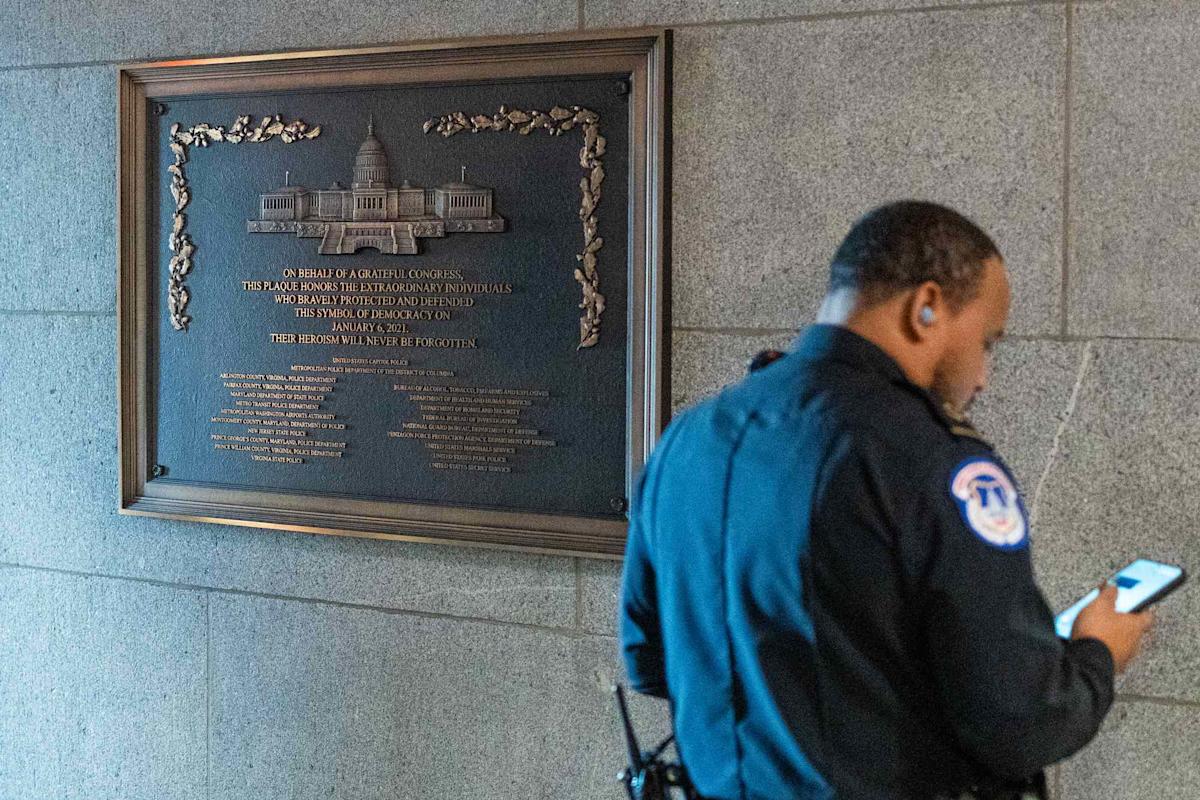
Honoring Heroism: The Jan. 6 Police Plaque and Its Controversial Journey
The U.S. Capitol has long stood as a symbol of democracy and governance, yet it has also become a poignant reminder of the tumultuous events of January 6, 2021. On this day, a violent mob stormed the Capitol in an attempt to overturn the results of the 2020 presidential election. In the aftermath of that dark day, a plaque was created to honor the law enforcement officers who defended the Capitol and its occupants. However, this tribute’s path has been anything but straightforward.
The Long Wait for Recognition
After a three-year delay, a plaque recognizing the bravery of law enforcement agencies was finally installed in the Capitol on March 7, 2023. This installation, however, was met with little fanfare. The plaque, echoing sentiments of gratitude, states, “On behalf of a grateful Congress, this plaque honors the extraordinary individuals who bravely protected and defended this symbol of democracy on January 6, 2021.” Yet, its installation lacked any ceremony, taking place in the early hours of the morning without the presence of media or public officials.
Legislation and Accountability
The journey of the plaque’s installation is rooted in legislation passed by Congress in March 2022, which required it to be mounted within a year. Reports indicate that delays occurred under the leadership of House Speaker Mike Johnson, drawing criticism from Democratic lawmakers. This political contention raises questions about the dynamics of honoring heroes in an increasingly polarized climate.
Harry Dunn, a former Capitol Police officer, highlighted the irony of the situation by stating, “I never thought honoring police officers would be this controversial.” Dunn, who took legal action against the U.S. Capitol Architect to expedite the plaque’s installation, emphasized the importance of this recognition—not only for morale but also for historical accountability.
A Quiet Installation
The plaque itself includes the names of various law enforcement agencies and departments that responded to the Capitol attack. A QR code is affixed next to it, directing visitors to a file with individual officers’ names. This feature serves as an interactive element, promoting engagement and recognition for the multitude of law enforcement personnel involved that day.
The installation’s quiet nature has not gone unnoticed. Many view it as emblematic of broader societal tensions regarding the events surrounding January 6. While some see the plaque as a well-deserved tribute, others question its timing and placement, further reflecting the divisive sentiments that continue to swirl around the Capitol riot.
The Shadow of Political Influence
Since the Capitol riot, political narratives have evolved significantly. Notably, former President Donald Trump and his associates have downplayed the severity of the events that transpired. Even one of Trump’s first actions upon returning to office was to pardon many individuals charged in connection with the attack, igniting fierce debates about accountability and memory.
Broader Implications
The plaque not only represents the sacrifices made by law enforcement officers but also serves as a historical marker, reminding future generations of the risks faced by those in service to democracy. Dunn expressed relief over the plaque’s installation but expressed concerns regarding its obscure placement, questioning whether it fulfilled the intentions outlined in the legislation.
In a recent post, Rep. Joe Morelle, a Democrat, highlighted the struggle to ensure the plaque’s visibility and significance. By stating, “Speaker Johnson may have tried to bury the January 6 plaque, but it’s finally in the Capitol,” he underscored the belief that recognition for those who defended democracy should not be contingent on political tides.
Public Awareness and Reflection
As citizens pass the plaque—or scan the accompanying QR code—they engage in a moment of reflection, invited to consider not only the heroism of the officers but also the ongoing national discourse around the events of January 6. This emblem serves as both a tribute and a conversation starter, prompting individuals to grapple with the nuanced realities of that day and its lasting impact on the American landscape.
This story of the Capitol plaque embodies a broader narrative: the struggle to commemorate history amidst partisan politics. As the nation navigates its complex past, the commitment to honoring heroes persists, reminding us of the sacrifices made in the name of democracy.


