

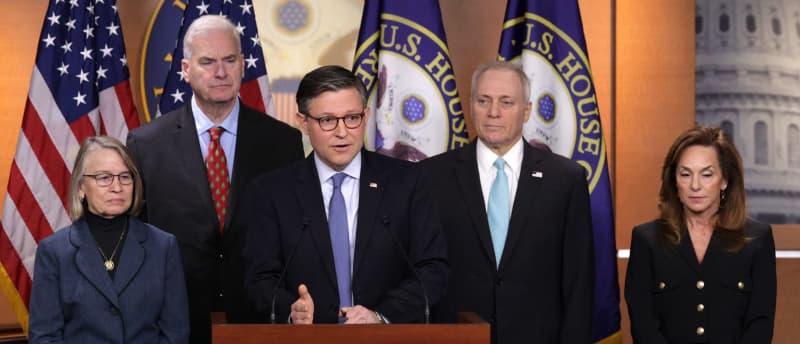

mike johnson,nancy mace,marjorie taylor greene,elise stefanik,anna paulina luna,gop ©(Photo by Alex Wong/Getty Images)
In recent months, Republican House Speaker Mike Johnson has encountered a wave of dissent from some of the most influential female figures within the House GOP. Prominent representatives like Elise Stefanik of New York, Marjorie Taylor Greene of Georgia, Nancy Mace of South Carolina, and Anna Paulina Luna of Florida have publicly expressed their frustrations with the House leadership, particularly regarding how decisions are made.
This vocal criticism emerges amid declining approval ratings for Congress, highlighting an increasing sense of dissatisfaction within the GOP ranks due to Johnson’s leadership style. Members are struggling to effectively tackle pressing issues such as health care and stock trading regulations.
Nancy Mace took to the New York Times for her criticism, positing that former Democratic Speaker Nancy Pelosi was a more effective leader than any of her Republican successors this century. She described GOP leadership under Johnson as “restrictive and ineffective,” blaming a small group behind closed doors for major decisions that marginalize the contributions of rank-and-file members, particularly women. Mace asserted, “Women will never be taken seriously until leadership decides to take us seriously.”
Following in Mace’s footsteps, Greene also shared her frustration during an interview on CNN’s “The Situation Room.” She articulated her feelings of being sidelined by Johnson, saying, “I’m no longer holding my breath,” and expressed concern that the Speaker doesn’t value their input adequately.
Greene has transformed into one of Johnson’s most critical adversaries, even filing a motion to remove him from his position after voicing her discontent with a $1.2 trillion spending bill she deemed catered more to Democrats than Republicans.
In her recent criticisms, Greene accused Johnson of ignoring Republican women’s legislative priorities and failing to advance key Trump-aligned initiatives. Most notably, she claimed that Johnson is operating under “direct orders from the White House,” drawing vigorous reactions across the political spectrum.
Stefanik’s frustrations mirror Greene’s disapproval. Johnson’s perceived lack of transparency and decisiveness has fueled her criticism of his leadership style. In previous positions, Stefanik was a pick for an ambassadorship during Trump’s administration, but her nomination was withdrawn, intensifying her discontent with GOP leadership.
Her recent exit from the gubernatorial race in New York marks a significant decision, with many attributing its fallout to her disagreements with Johnson. She described him as a “political novice,” raising concerns about his capacity to lead the House effectively.
Despite moments of rapport between them, such as a congenial conversation where both expressed their viewpoints, Stefanik hasn’t retracted her critiques. In fact, she has raised alarms about misleading practices regarding critical legislative provisions.
Turning to Luna, she too has articulated her grievances with the leadership. Her recent actions include filing a discharge petition aimed at escalating a stock trading ban for Congress members, criticizing the leadership for a delay in scheduling votes on key legislative issues.
Luna’s concerns were underscored by warnings that leadership might obstruct her initiatives while trying to shift blame for inaction. Despite these challenges, she found some common ground with Johnson, who agreed to bring discussions on congressional stock trading regulations to the floor in the near future.
This rising tide of dissent is coupled with a broader trend among Republican women stepping away from Congress. Mace is pursuing a gubernatorial campaign, while Greene plans to vacate her seat at the year’s close. Conversely, Luna is the only one among them committed to her current position, demonstrating a multifaceted dynamic within GOP female representation.
Despite these high-profile conflicts, Republican women maintain their foothold in critical leadership roles. Figures like Stefanik chair the House Republican Leadership, while others hold positions of influence within various committees. This ongoing evolution within the GOP highlights the complexity of internal dynamics and the push for greater inclusivity in decision-making processes.





:max_bytes(150000):strip_icc()/zach-braff-031326-8443e2c035b04fb58697742ac4b4295c.jpg?ssl=1 "Zach Braff Addresses Speculations About Dating an AI Chatbot")
