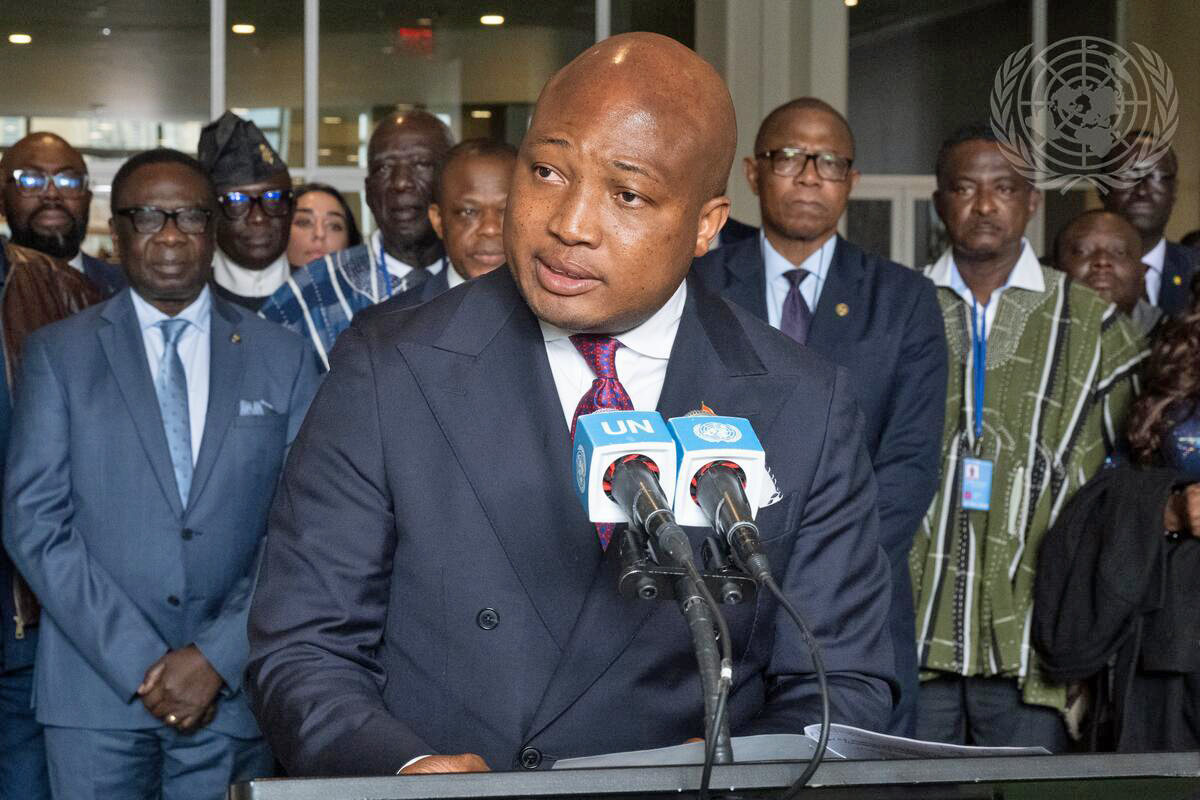
Media Stakeout by Samuel Okudzeto Ablakwa, Minister for Foreign Affairs of Ghana, following the vote in the General Assembly on the Resolution declaring the Trafficking of Enslaved Africans and the Racialised Chattel Enslavement of Africans as the Gravest Crime Against Humanity.
Photo by Eskinder Debebe/UN
For the second time in a single month, the United States and Israel have found themselves aligning against a global consensus that seeks to address historical injustices. Initially, their alliance was highlighted by a joint military operation against Tehran, Iran. More recently, they reaffirmed this partnership during a General Assembly session at the United Nations, marking the Day of Remembrance with notable opposition to a resolution that sought to formally recognize the atrocities of the Transatlantic Slave Trade.
The significance of this resolution cannot be overstated. It aimed to declare the buying and selling of humans as “the gravest crime against humanity.” Quite strikingly, only three countries— the US, Israel, and Argentina—voted against this resolution, which gained support from 123 nations, showcasing a clear divide between the global majority and a few reluctant states.
An observer commented on the voting patterns, expressing a lack of surprise at Argentina’s position, given its historical ties. However, he noted the US’s refusal to confront its history, suggesting that this pattern of denial is not unusual. The observer also pointed out Israel’s past alliances, reiterating the complexity of their voting behavior.
The military actions taken by Israel and the US against Iran on February 28, 2026, sparked global concern over their collaborative stance. Their recent vote against acknowledging the slave trade underlines a controversial alliance that many perceive as an endorsement of exploitation and oppression.
This decision has led to a rift within global political discourse, separating those seen as warmongers and capitalists from those advocating for nationalism and constitutionalism. Among the US public, President Donald Trump is facing an unprecedented approval rating low of 36%. Ironically, Iran cast its vote in favor of recognizing the horrors of human trafficking, standing in stark contrast to the American stance.
In defending his military actions, Trump argued that they were not influenced by European allies but rather driven by the necessity of regime change in Iran. Critics of this approach argue that such unilateral decisions should involve Congressional input, raising questions about democratic processes and accountability.
Back in Israel, Prime Minister Benjamin Netanyahu is experiencing challenges of his own, with a 58% unfavorable rating among his constituents amid widespread calls for his resignation. The backlash against his leadership is further complicated by the recent UN vote, which has prompted scrutiny from Africans and their diasporas regarding the implications of US-Israel policies.
Public sentiment is increasingly evident through social media and protests, with the global “No Kings” movement indicating discontent with unilateral governance. As one critic aptly noted, the US’s actions exhibit a clear disregard for issues of racial justice, portraying bad behavior that fuels unrest.
In response to the UN vote, Ghana’s President John Dramani Mahama placed a wreath at the Ark of Return monument, symbolizing remembrance for the ancestors lost to enslavement. President Mahama articulated that this act reflects an important step in restoring dignity and humanity to those who suffered historical injustices.
During the General Assembly, Ghana’s Foreign Minister, Samuel Okudzeto Ablakwa, expressed the collective relief and pride of the African delegation over the resolution’s passage. Reflecting on the significance of this moment, he emphasized that the adoption of this resolution reinforces a commitment to remember rather than erase painful histories.
Interestingly, this sentiment comes on the heels of Ghana’s decision to deport three Israeli citizens in retaliation for Israel’s detention of Ghanaians, an act that underscores the complex diplomatic ties between the nations. In his remarks, Ablakwa did not dwell on past grievances but instead focused on the resolution’s broader implications for collective memory and awareness.
He pointedly criticized the US and Israel for missing a critical opportunity to acknowledge their historical roles in perpetuating slavery, framing their opposition as a refusal to engage in necessary reckoning with the past. His remarks echo a sentiment that resonates widely, particularly among communities that feel marginalized and overlooked by decision-makers.
Rev. Al Sharpton added to the discussion, calling for America to embrace its historic advancements rather than shying away from its legacy. He articulated that the country should stand as a beacon of progress rather than engage in erasure of its past through changes in educational curricula.
With 52 nations abstaining from the vote, the repercussions of this UN session extend beyond mere political rhetoric. The calls for accountability, recognition, and reparations are intensifying, suggesting a crucial turning point in the global dialogue surrounding historical oppression.
In this complex geopolitical landscape, the interplay of memory, justice, and advocacy continues to shape the demands of a more equitable world.