When Trong first arrived at the counseling center, he was a shadow of his former self—physically and mentally exhausted. Initially, he avoided eye contact, sitting with his arms crossed, and repeatedly saying, “I am fine,” whenever Tung inquired about his mental state. This denial was a mask, hiding the deep-seated struggles he faced. But after being reassured of his safety and the confidentiality of his space, Trong began to open up about the past year, a year marked by overwhelming loss.
Tung learned that 12 months prior, Trong experienced a devastating double blow: he lost his job and saw a staggering VND1 billion (approximately $38,000) evaporate in the stock market. This was not just financial ruin; it marked the unraveling of his carefully curated facade. Every day, he donned his work clothes and left home at the usual time, but instead of heading to the office, he spent his days wandering aimlessly in parks and on city streets until nightfall. A significant part of his struggle involved maintaining this pretense. When his wife asked for money for their daily needs, he maxed out credit cards to maintain the illusion of normalcy.
Tung described the clinical symptoms his patient exhibited: chronic insomnia and crippling anxiety over his burgeoning debts. This stark contrast between his reality and the life he pretended to lead eventually pushed Trong to his breaking point. His story is not an isolated incident but rather a reflection of a broader societal issue—one that echoes through the lives of many men grappling with their mental health.
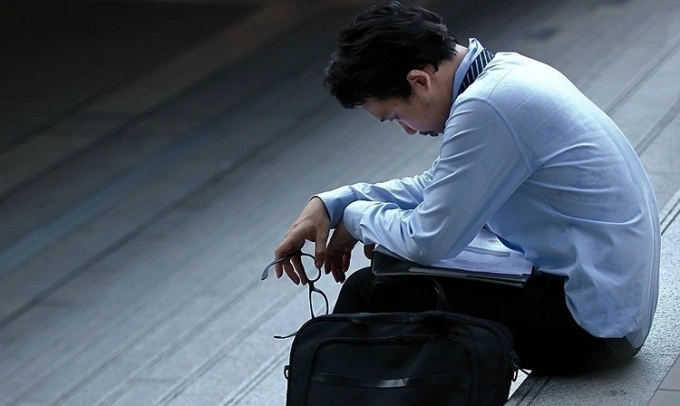 |
|
Men usually find it hard to talk about their mental health. Image from Pexels |
Similarly, Dr. Nguyen Viet Chung from Hospital E’s mental health department encountered another patient, Dat, a 37-year-old small business owner, who came seeking help for heart palpitations and breathing difficulties. Despite normal results from cardiology tests, Dat’s situation revealed a deeper mental health crisis. Every morning, he would lock himself in the bathroom, slapping his face to stave off sleep after nights fraught with anxiety.
As Dat’s shop’s revenues dwindled and his bank debts mounted, he chose silence over vulnerability, never sharing his burdens with his wife. When asked about his fatigue, he consistently reassured his family that everything was fine, a mantra that proved increasingly hollow. Dr. Chung identified Dat’s state as one of constant high alert, leading to generalized anxiety disorder and panic attacks, amplified by his relentless effort to maintain the role of family breadwinner.
The struggle for many men is rooted in cultural norms surrounding masculinity that dictate silence in the face of emotional distress. Men are often taught from an early age that emotional expression is a weakness—that to cry is “unmanly” and to share feelings is a sign of frailty. This perpetuates a cycle of toxic masculinity, where emotional repression is heralded as a trait of strength.
The consequences are dire. According to the World Health Organization, approximately 850,000 individuals die by suicide each year globally, with depression being the leading cause. Interestingly, while women may be more frequently diagnosed with depression, it is men who are statistically more likely to complete suicide. This unsettling paradox highlights men’s reluctance to seek help, often persisting until their struggles have spiraled alarmingly out of control.
In Vietnam, around 15% of the population experiences some form of mental disorder, with depression and anxiety making up a significant portion of this figure. Despite the universal need for connection and understanding, this is largely suppressed in men. A survey conducted by VnExpress in 2022 revealed that 27% of male respondents wished to speak with a mental health specialist about their pressures related to finance, work, and family, yet many refrained due to fear of judgment.
Tung remarked that many men see themselves as the “backbone of the family,” leading them to internalize their stresses instead of communicating openly. In contrast, women often find relief in sharing their burdens and expressing their emotions through tears and conversation. Many men, however, opt for temporary escapes in alcohol and sports, seeking superficial relief rather than addressing the root of their distress.
This culture of suppression can lead to a serious decline in emotional and physical health. Long-term emotional repression is a ticking time bomb that can exacerbate mental health issues, lower productivity, and create a cycle of failure and self-blame. Too often, men do not seek help until their health has severely deteriorated and requires intensive treatment, when an earlier intervention might have been sufficient.
Experts emphasize the importance of redefining strength to include emotional openness alongside physical resilience. A genuine strong individual is one who allows themselves to feel emotions and actively addresses them. Men should seek to engage in low-pressure conversations—perhaps while cooking or watching TV—with trusted individuals, enabling them to open up gradually.
Listeners play a crucial role in this process. It is important for them to approach these conversations without judgment, validating the experiences and feelings shared rather than immediately rushing to provide solutions. By fostering small, everyday interactions built on understanding and compassion, the emotional barriers many men build can gradually begin to thaw. This can open up genuine connections, allowing men—like Trong and Dat—to truly engage with themselves and the people around them.