

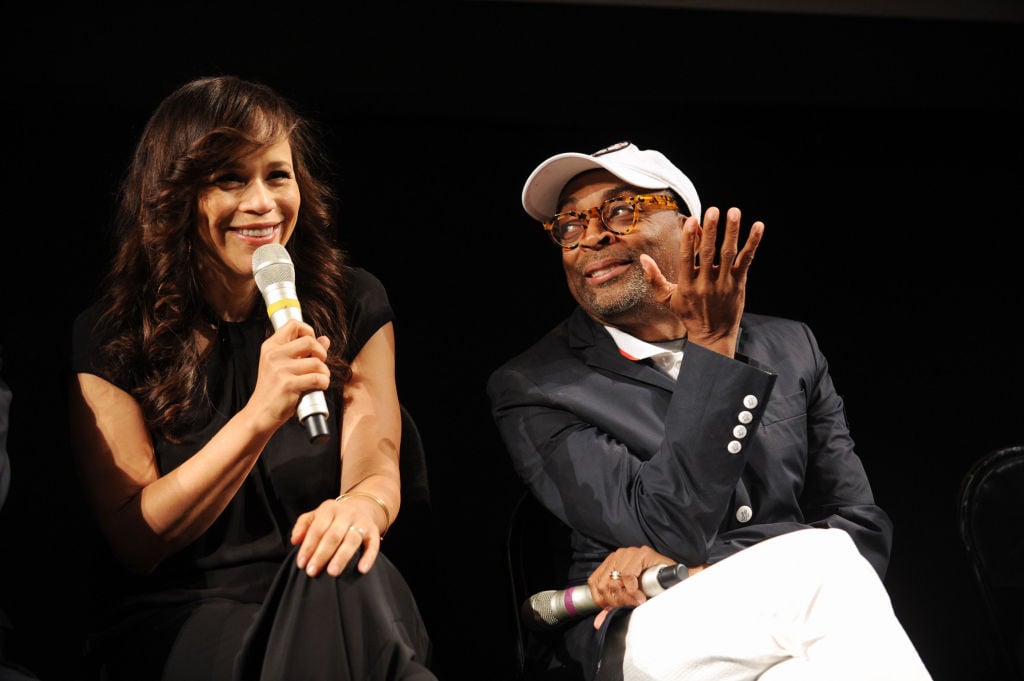
Spike Lee: Bridging Cultures through Film
In a recent interview with theGrio, legendary filmmaker Spike Lee opened up about his latest film, “Highest 2 Lowest,” and the significance of portraying the connections between African Americans and Puerto Ricans in his storytelling. Lee, known for vividly depicting life in New York City, has a unique way of weaving cultural narratives that resonate well beyond mere entertainment.
A Signature Feature in Spike Lee’s Work
If you’ve ever experienced a Spike Lee Joint, you may have noticed a recurring theme: the representation of Black Americans and Puerto Ricans. This dynamic was evident in Rosie Perez’s character in the groundbreaking 1989 film “Do The Right Thing,” which captured the complexities of racial and cultural identities in Brooklyn. In “Crooklyn,” we meet Minnie, whose curly features are humorously dubbed as “Puerto Rican hair.” The theme continues in the Netflix series “She’s Gotta Have It,” where Afro-Puerto Rican heritage and bomba music are celebrated.
In “Highest 2 Lowest,” Lee’s fifth collaboration with Denzel Washington—whom he affectionately refers to as the “greatest living actor”—there’s an impactful scene set during the Puerto Rican Day Parade. This moment not only affirms Lee’s commitment to include Puerto Rican narratives but also exemplifies the ways these intertwined identities are celebrated and recognized.
Historical Context: The Melting Pot of Fort Greene
Lee reflected on his upbringing in Fort Greene, Brooklyn, noting how the neighborhood before gentrification was a mix of Black and Puerto Rican residents. “Back then, it was Black and Puerto Rican,” he shared, alluding to how the Dominicans had not yet taken over as the dominant Hispanic group in the area. This rich tapestry of cultures contributed to the vibrancy of New York City, a city that birthed hip-hop, where Puerto Ricans and African Americans shared struggles and celebrations.
Historical anecdotes further illuminate Lee’s memories. In the 1960s, Black Americans and Puerto Ricans banded together in advocacy for civil rights, reshaping the societal structures of New York City. Notable collaborations occurred between groups like the Black Panthers and the Young Lords, a Puerto Rican militant organization. These alliances underscore a shared history of resistance, identity, and kinship.
The Complexities of Identity and Relationship
While the cultural ties are strong, the relationship between Black and Puerto Rican communities has not always been seamless. According to Sonia Song-Ha Lee in her book Building a Latino Civil Rights Movement: Puerto Ricans, African Americans, and the Pursuit of Racial Justice in New York City, tensions sometimes arose when individuals within the Puerto Rican community aspired to connection with whiteness, distancing themselves from Black Americans. This historical context provides insight into the complexities faced by these communities.
Despite societal pressures, Lee stresses the importance of love and unity that existed within these neighborhoods. “Black people and Puerto Rican intermarried, man,” he remarked, emphasizing the connections that transcend racial and ethnic boundaries.
Diverse Narratives in a Pluralistic Society
Lee articulated that each community has its own complexities. “What we have here in New York ain’t what they have in L.A.,” he stated, making a distinction between the unique dynamics of racial groups in different geographical locations. In L.A., for example, the demographics lean heavily towards Mexican and Black, often creating rivalries over resources and politics. It’s crucial to regard Latino communities as diverse, each with their history and narratives.
The term “Hispanic” encompasses over 20 countries, and this diversity is frequently overlooked. For instance, Afro-Latinos exist across numerous Latin American nations, such as Colombia and Brazil, yet often lack visibility in mainstream discussions about race.
Celebrating Cultural Collaborations
Lee highlighted a noteworthy casting choice in “Highest 2 Lowest.” The film features a powerful scene with the musical icon Eddie Palmieri, who passed away just after the screening. The scene captures the essence of New York’s cultural blend, featuring salsa music punctuated by Afro-Puerto Rican dance. “To have the great Eddie Palmieri and the Salsa Orchestra bless us… that’s a big blow,” Lee reflected, illustrating how art continues to foster connections among disparate cultures.
The Role of Art in Uniting Communities
As various ethnic and racial groups engage in discussions about allyship during a time of increased white nationalism in the United States, the role of art and media is paramount. Lee’s intentional storytelling aims to bridge cultural divides, allowing audiences to see the myriad layers of identity present in New York City. By highlighting mutual histories, cultures, and aspirations, films like “Highest 2 Lowest” create space for understanding and reimagining the future of interconnected communities.
Nestled within these vivid narratives is the work of Natasha S. Alford, the Senior Vice President of TheGrio and an award-winning journalist. Alford’s contributions to the dialog surrounding race and culture are significant, as she invites audiences to consider the rich tapestry of African American and Puerto Rican histories intertwined in Lee’s filmography.


